.webp)


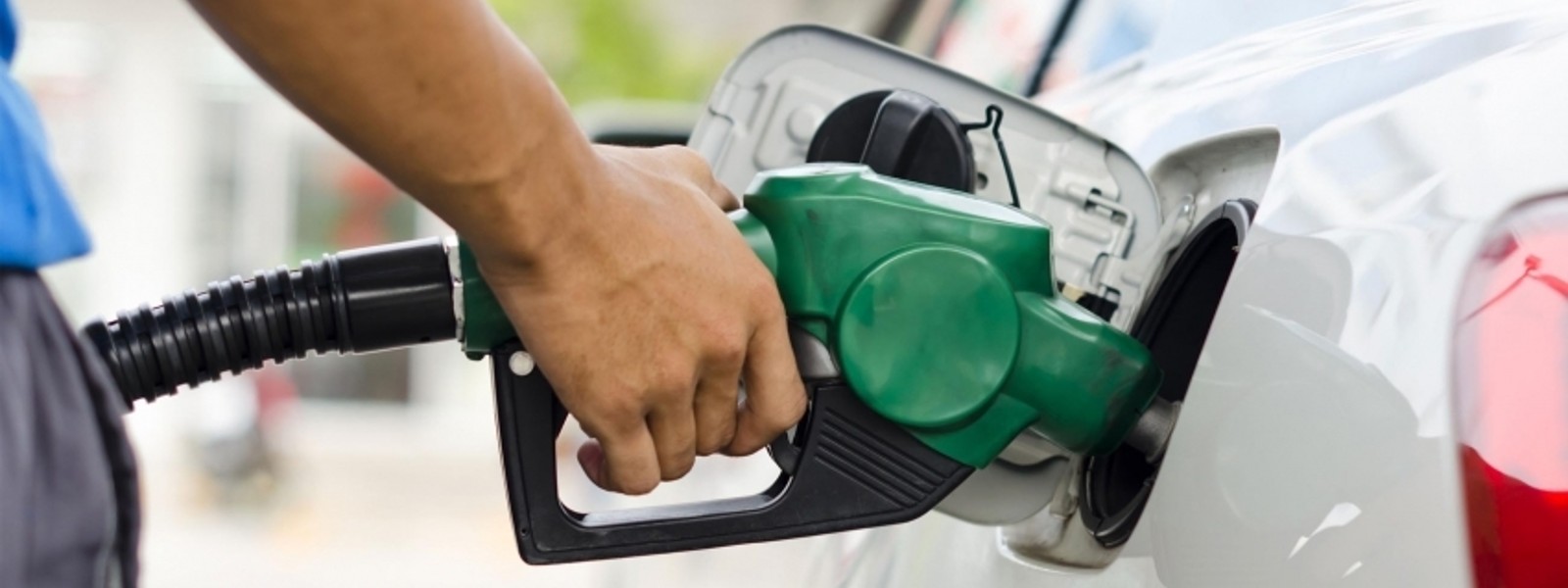
GLOBAL FUEL WATCH: A "Man-Made" Crisis Pushes World Energy Prices to Historic Thresholds



.png )
COLOMBO(News1st); As the geopolitical landscape in the Middle East shifts following the recent escalations between Iran, Israel, and the United States, the global energy market has been plunged into a state of unprecedented volatility. For the first time in history, several nations are seeing fuel prices breach "all-time high" ceilings a direct result of what experts are calling a *"man-made global energy storm."*
*The "Pass-Through" Reality: Why Governments Aren't Intervening*
A common trend emerging across the globe is the move toward *market-based pricing.* Unlike previous decades where governments might have absorbed the cost through heavy subsidies, the sheer scale of the current $100+ per barrel crude spike has made state intervention impossible for most.
From North America to Southeast Asia, administrations are passing the cost directly to the pump. The logic is simple but harsh: Attempting to "hide" the price through subsidies would lead to a *rapid depletion of national foreign reserves,* eventually resulting in total fuel bankruptcy.
*The Global Heat Map: No Nation is Immune*
Data from the third week of March 2026 confirms that this is not a localized issue. The "War Tax" is being paid by citizens in the world's most stable economies:
*• United Arab Emirates (UAE):* Despite being a major oil producer, the UAE has implemented its monthly price hike to align with global benchmarks. For the first time, residents in the Gulf are feeling a significant pinch at the pump, proving that proximity to the source does not grant immunity.
*• Australia:* Motorists in Sydney and Melbourne have seen a staggering *12.5% increase in a single week.* The Australian government has maintained its stance that prices are dictated by the "Singapore Benchmark," leaving the public to shoulder the international burden.
*• United States:* US petrol averages have surged past *$4.50 per gallon.* Despite being a global superpower, the US is allowing market forces to dictate prices to protect its long-term economic stability.
*• United Kingdom:* Petrol and diesel prices have surpassed the *£1.95 per liter* mark. The UK government has refused to slash fuel duties further, citing the need to maintain fiscal buffers.
*• Hong Kong:* Consistently the world’s most expensive place for motorists, prices here have now breached *$3.10 USD (approx. Rs. 930) per liter.*
*• Singapore:* As the regional pricing hub for Asia, Singapore has seen pump prices hit record levels of *$3.25 SGD.* Even with a strong currency, the city-state is allowing prices to reflect the true cost of the *"Strait of Hormuz Risk."*
*• India:* Our neighbour continues its policy of daily price revisions. Indian consumers are seeing consistent hikes as the government balances infrastructure spending against rising crude import costs.
*The "Chokehold" on Supply: The Strait of Hormuz*
The root of the crisis lies in the *Strait of Hormuz,* a narrow but vital artery through which *20% of the world’s oil supply* flows. With the ongoing conflict threatening this passage, shipping insurance rates have tripled, and freight costs have reached "war-zone" levels. This is a physical disruption of supply that no domestic policy in Sri Lanka or anywhere else can control.
*Strategic Management: The QR System and Odd-Even Policy*
To ensure national stability and fair distribution during this global upheaval, Sri Lanka has activated its proven management protocols.
*• National Fuel Pass (QR System):* This has become the backbone of our domestic energy security, allowing for precise, data-driven distribution that prevents the hoarding seen in unregulated markets.
We
*• Odd-Even Days Pumping:* The re-implementation of this system has provided a massive boost to crowd management. By streamlining vehicle arrivals based on registration numbers, the *Ceylon Petroleum Corporation (CPC)* has effectively minimized congestion, ensuring public access without the chaos of unmanaged queues.
*CPC Update: Latest on Fuel Stocks*
The *Ceylon Petroleum Corporation (CPC)* has issued a latest update confirming that while global prices are high, *supply remains continuous.*
*• Shipments Secured:* CPC has successfully secured the necessary shipments for the upcoming month.
*• Refinery Operations:* The refinery is operating at an optimal level to meet national demand.
*• Official Directive:* Officials reiterate that as long as the public adheres to *QR quotas* and the *Odd-Even schedule,* there is no risk of a "dry-out" at the pumps.
*What This Means for Sri Lanka: Preparation Over Panic*
Sri Lanka, as an energy importing nation, is now standing at the edge of this global wave. It is crucial to understand that upcoming price revisions are a *survival mechanism* to ensure the country does not return to fuel shortages.
*1. Economic Resilience:* Reflecting the global price ensures the CPC has the liquidity to purchase the next shipment.
*2. A Shared Global Burden:* Whether in London, Dubai, or Colombo, we are all experiencing the exact same "Man-Made" crisis.
*3. The Stability Factor:* Panic buying only accelerates the problem. Stocks are being managed to ensure continuous supply, provided consumption remains disciplined.
*The Bottom Line*
The world is navigating a crisis of international proportions. While the numbers at the pump are difficult to digest, they are the honest reflection of a world in conflict. By trusting the management systems currently in place, Sri Lankans can maintain national stability with resilience and calm.
Other Articles


-831909_550x300.jpg)






Featured News




News 1st, MTV Channel (Pvt) Ltd, MBC Networks (Pvt) Ltd, 45/3, Braybrooke Street, Colombo-02.
T.P : +94 114 792 700,
Fax : +94 114 792 733
T.P : +94 114 792 700,
Fax : +94 114 792 733




 |  |  |
|---|---|---|
 |  |  |
 |  |  |
 |

.gif)