.webp)


Rupee Slide Not a Crisis: Govt Pushes Back



.png )
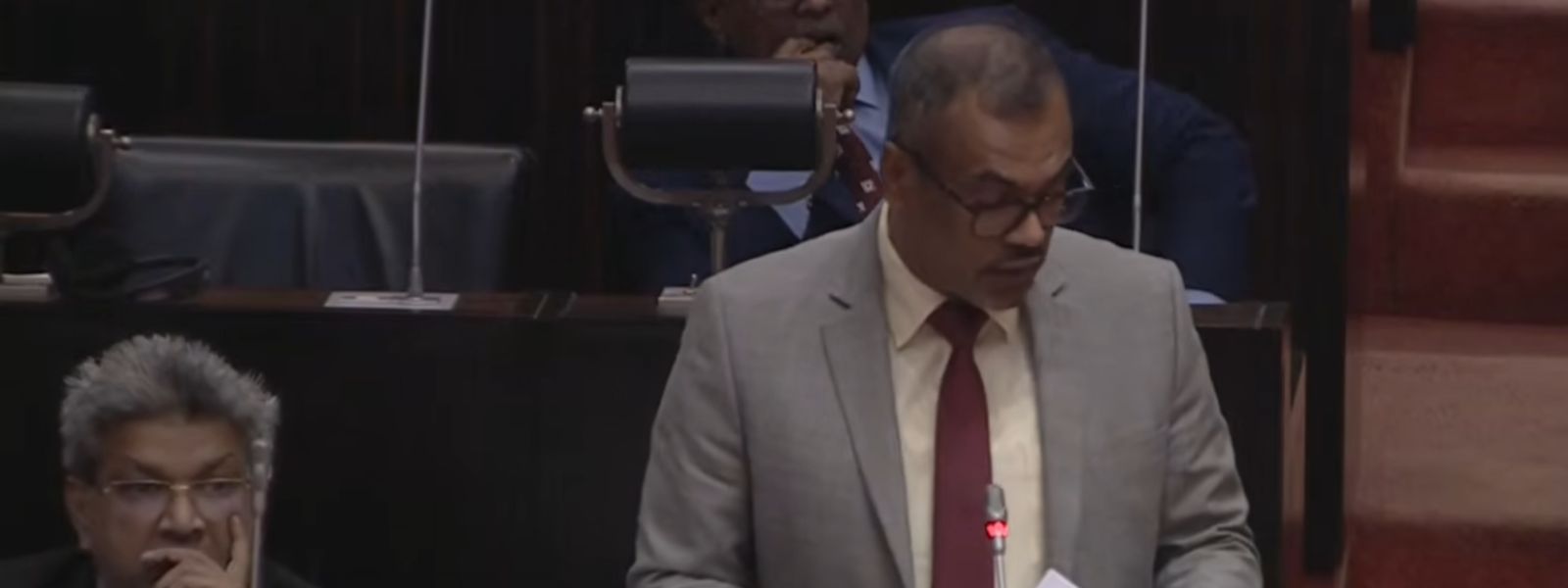
COLOMBO (News 1st); In a firm and carefully argued statement before Parliament today, Deputy Minister of Finance Dr. Anil Jayantha rejected growing concerns that the weakening rupee signals a deeper economic crisis, insisting instead that Sri Lanka’s economy remains resilient and on a path of gradual recovery.
Addressing lawmakers during a debate on new regulations under the Imports and Exports Control Act, Dr. Jayantha pushed back against what he described as “misleading attempts” to link exchange rate depreciation directly with economic collapse.
At the heart of his argument was a simple but decisive message: currency fluctuations alone do not define the health of an economy.
“There is no logical basis to claim that a rise in the exchange rate automatically results in an economic downturn,” he asserted, dismissing such assumptions as unfounded.
Instead, the Deputy Minister framed the current situation as one of active management rather than crisis. He acknowledged that exchange rate movements can trigger price pressures, particularly on imports, but emphasized that these effects are already being contained under Sri Lanka’s inflation management framework.
In a note of cautious optimism, Dr. Jayantha pointed to a string of anticipated financial inflows expected to strengthen the country’s external position. Among them is a projected $700 million disbursement from the International Monetary Fund, alongside further funding pipelines from the Asian Development Bank and the World Bank, potentially totaling hundreds of millions of dollars more.
Far from signaling instability, he suggested these developments demonstrate international confidence in Sri Lanka’s ongoing recovery efforts.
But perhaps his strongest warning came against what he described as a dangerous economic misstep: attempting to solve challenges by shrinking the economy itself.
“Our approach is not to halt or contract the economy in search of solutions. That path has pushed other countries into crisis,” he said.
Instead, the government’s strategy, he explained, is focused on sustaining economic momentum, keeping activity alive while addressing financial pressures in parallel.
Repeatedly, Dr. Jayantha returned to a central theme: the economy is not stalled, it is moving.
This forward motion, he argued, is precisely what allows policymakers to navigate external shocks, including the current depreciation of the rupee, which he attributed largely to global factors rather than domestic weaknesses.
In that context, he delivered a clear and reassuring conclusion: external-driven currency depreciation, he insisted, “will not derail growth nor collapse the economy.”
Other Articles

-839962_550x300.jpg)
-839949_850x460-839955_550x300.jpg)







Featured News

-835300_550x300.jpg)



News 1st, MTV Channel (Pvt) Ltd, MBC Networks (Pvt) Ltd, 45/3, Braybrooke Street, Colombo-02.
T.P : +94 114 792 700,
Fax : +94 114 792 733
T.P : +94 114 792 700,
Fax : +94 114 792 733




 |  |  |
|---|---|---|
 |  |  |
 |  |  |
 |

.gif)