


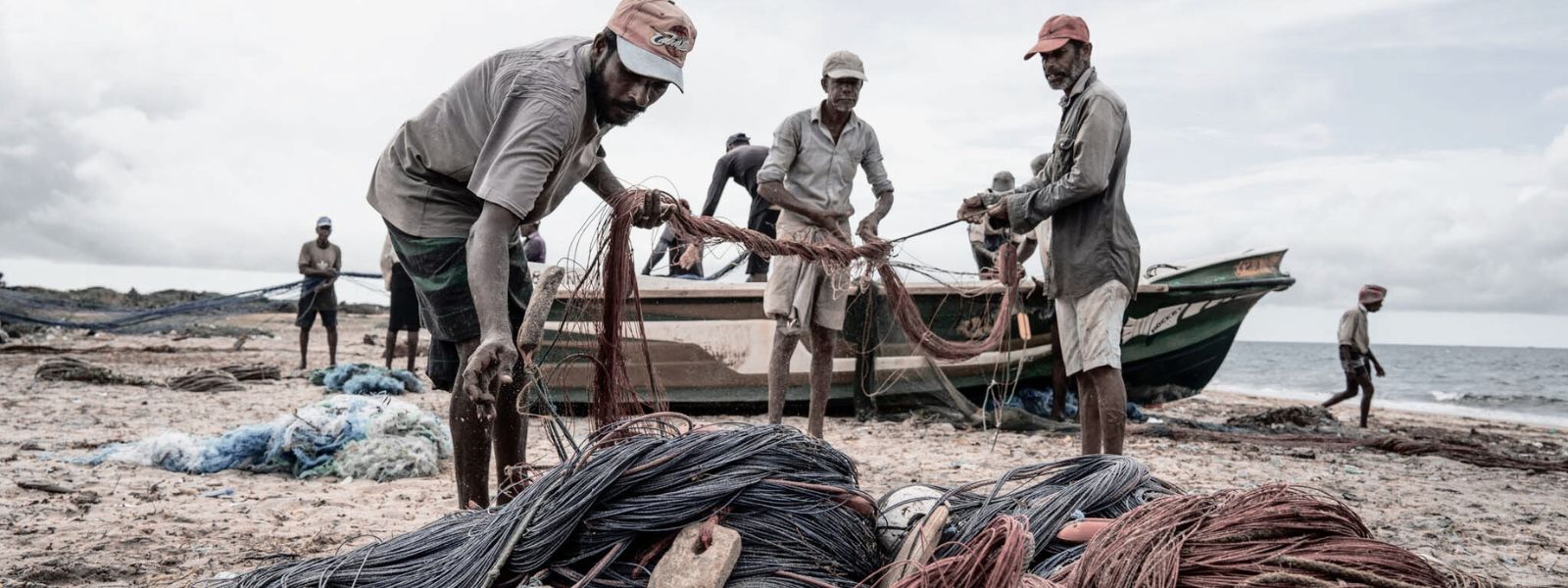
Sri Lanka Sets Sights on USD 600 Mn Fisheries Export Target by 2030



.png )
COLOMBO (News 1st); In a sector that feeds the nation and supports thousands of families along Sri Lanka's coastline and inland waterways, the government has unveiled an ambitious plan to transform the fisheries industry into a modern, high-value export powerhouse.
Presenting the 2027 Budget, President Anura Kumara Dissanayake announced a wide-ranging package aimed at modernising the industry through infrastructure development, scientific research, technological advancement and direct support for fishing communities.
The government has set an ambitious target of doubling fisheries export earnings from USD 300 million to USD 600 million by 2030, while strengthening food security and boosting incomes across the sector.
To support that goal, Rs. 6.2 billion has been allocated for fisheries development, with funding directed towards harbour upgrades, research, inland fisheries and resource management initiatives.
Among the biggest investments is a Rs. 5 billion allocation for fisheries infrastructure in the Northern Province, including the development of anchorages and the Pesalai Fishery Harbour.
A further Rs. 1.5 billion has been earmarked for the Gandara Fishery Harbour, while Rs. 300 million will be spent on improving the Chilaw and Wellamankara fishery harbours.
The long-troubled Peliyagoda Fish Market is also set for a major overhaul. With inadequate sanitation, limited cold storage and long-standing waste management concerns continuing to hamper operations, the Budget proposes Rs. 1 billion in equity capital to modernise the facility under a new business management structure.
The government is also backing local manufacturing in the sector, allocating Rs. 500 million to North Sea Limited to strengthen net production and repair facilities through the purchase of new machinery and the construction of a dedicated net manufacturing and repair centre.
Investment is also flowing into inland fisheries, with Rs. 300 million allocated for the development of the Polonthalawa Aquaculture Development Centre and Rs. 250 million set aside to expand cage fish farming, a method that pilot projects have shown can significantly increase fish production in inland reservoirs.
Meanwhile, Rs. 200 million will be provided to the Ceylon Fisheries Corporation to upgrade its retail network, while Rs. 1 billion has been allocated for fisheries resource management, including ocean surveys, habitat mapping, fish stock assessments, environmental monitoring and ecosystem restoration programmes.
Recognising the dangers faced daily by fishing communities, the President also announced that compensation paid to the families of fishermen who die in work-related accidents will be doubled from Rs. 1 million to Rs. 2 million.
Other Articles
-862070_550x300.jpg)



-862033_550x300.jpg)




Featured News




News 1st, MTV Channel (Pvt) Ltd, MBC Networks (Pvt) Ltd, 45/3, Braybrooke Street, Colombo-02.
T.P : +94 114 792 700,
Fax : +94 114 792 733
T.P : +94 114 792 700,
Fax : +94 114 792 733




 |  |  |
|---|---|---|
 |  |  |
 |  |  |
 |

