.webp)


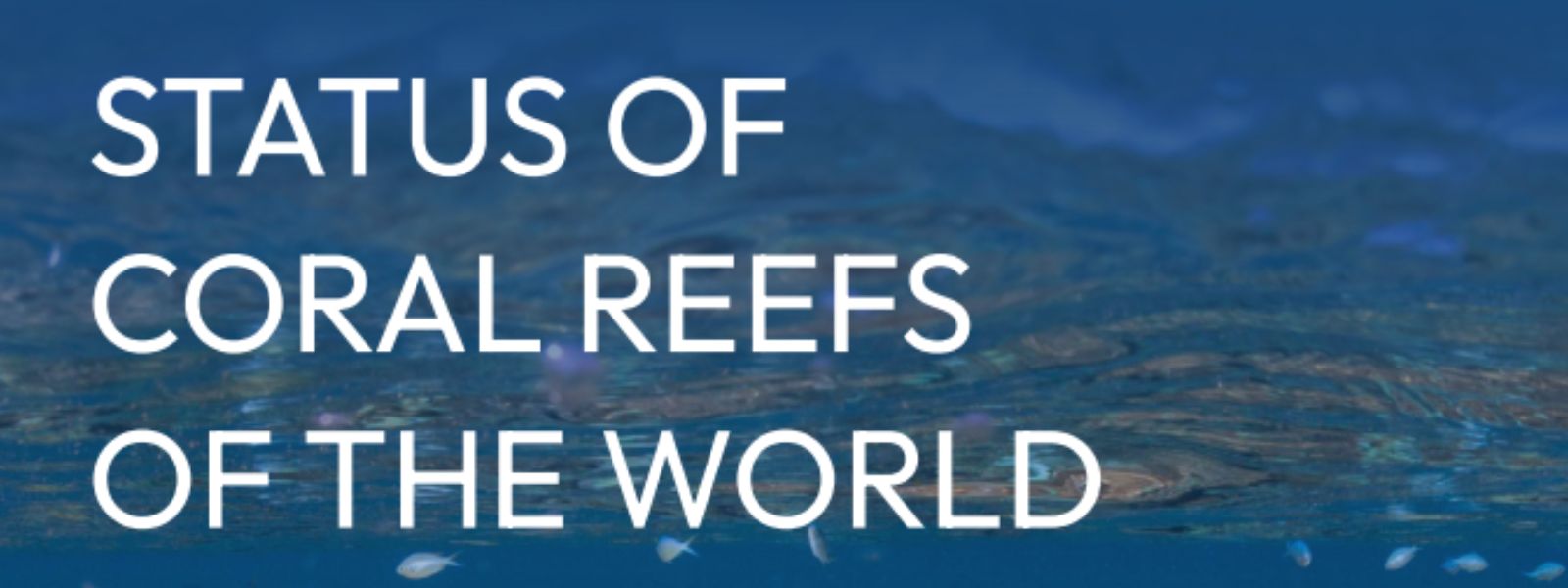
South Asia Emerges As Rare Coral Recovery Success Story



.png )
COLOMBO (News 1st): At a time when coral reefs across much of the world are battling unprecedented heat stress, bleaching and long-term decline, South Asia has emerged as one of the few regions showing signs of recovery.
According to the latest Status of Coral Reefs of the World: 2025 report published by the Global Coral Reef Monitoring Network (GCRMN), South Asia recorded a 16.2% increase in hard coral cover between the 1997-2009 period and 2020-2024, making it one of only two regions globally to demonstrate a significant recovery trend, with the other being the Western Indian Ocean.
The report, based on more than 21 million observations from over 87,000 surveys conducted at nearly 37,000 reef sites worldwide, describes South Asia as one of the rare bright spots in an otherwise concerning global picture for coral reefs.
Researchers found that average hard coral cover across South Asia increased from 30.1% to 35%, representing a significant recovery despite repeated marine heatwaves and global bleaching events over the last two decades.
The region includes coral reef systems in Sri Lanka, India, the Maldives, Lakshadweep, Bangladesh, Myanmar and the Chagos Archipelago. The report notes that the Maldives alone accounts for almost 59% of South Asia's coral reef extent, while Sri Lanka and India's reef systems form a key part of the West and South Indian Shelf subregion.
The strongest contributions to the recovery were observed in the Maldives and Chagos Archipelago, where reefs demonstrated a remarkable ability to rebound following severe bleaching events. The report notes that after devastating impacts from the 1998 global bleaching event, many reefs recovered substantially over the following years, highlighting the resilience of parts of the region.
However, the findings also underline growing concerns.
While South Asia's overall trend remains positive, scientists noted that recovery patterns are uneven. Coral reefs in the West and South Indian Shelf, which includes Sri Lanka and parts of India, recorded a decline in hard coral cover over the assessment period, suggesting that continental reef systems may be more vulnerable to the combined effects of climate change and local human pressures than oceanic atolls such as the Maldives and Chagos.
The report identifies repeated marine heatwaves, coral bleaching, coastal development, pollution, wastewater discharge, destructive fishing practices and algal blooms among the major threats facing reefs across South Asia.
Scientists also warn that the fourth global coral bleaching event, which intensified during 2023 and 2024, has already affected parts of the region. In the Maldives, researchers documented significant declines in coral cover following the latest bleaching event, raising concerns about whether future recovery can keep pace with increasingly frequent climate-related disturbances.
The South Asian findings stand in sharp contrast to the global outlook presented in the report.
Globally, average hard coral cover has declined by 9.5% compared to historical levels, while coral reefs suffered an 8.9% decline between 2023 and 2024 alone, the largest single-year drop ever recorded. Average global coral cover fell to 25.8% in 2024.
The report states that coral reefs worldwide are increasingly being affected by more frequent marine heatwaves linked to climate change, with four global bleaching events recorded since 1998. Recovery periods that once lasted around a decade have now shrunk to just five or six years in many regions, giving reefs less time to regenerate between major disturbances.
Several regions recorded severe long-term declines, including the Caribbean, where hard coral cover has fallen by 43.4%, and the ROPME Sea Area, which suffered a decline of 48.7%. Australia and parts of the Pacific have also reported notable losses.
Despite those concerns, scientists emphasize that coral reef collapse is not inevitable.
The report concludes that reefs can recover if global warming is limited, local threats are reduced and long-term conservation efforts are strengthened. It identifies South Asia as an example that recovery remains possible when coral reefs are given sufficient time and conditions to regenerate.
Other Articles

 priyankaraaaaa pereraaa-853439_550x300.jpg)

-853401_550x300.jpg)






Featured News


-849213_550x300.jpg)
News 1st, MTV Channel (Pvt) Ltd, MBC Networks (Pvt) Ltd, 45/3, Braybrooke Street, Colombo-02.
T.P : +94 114 792 700,
Fax : +94 114 792 733
T.P : +94 114 792 700,
Fax : +94 114 792 733




 |  |  |
|---|---|---|
 |  |  |
 |  |  |
 |

.gif)