


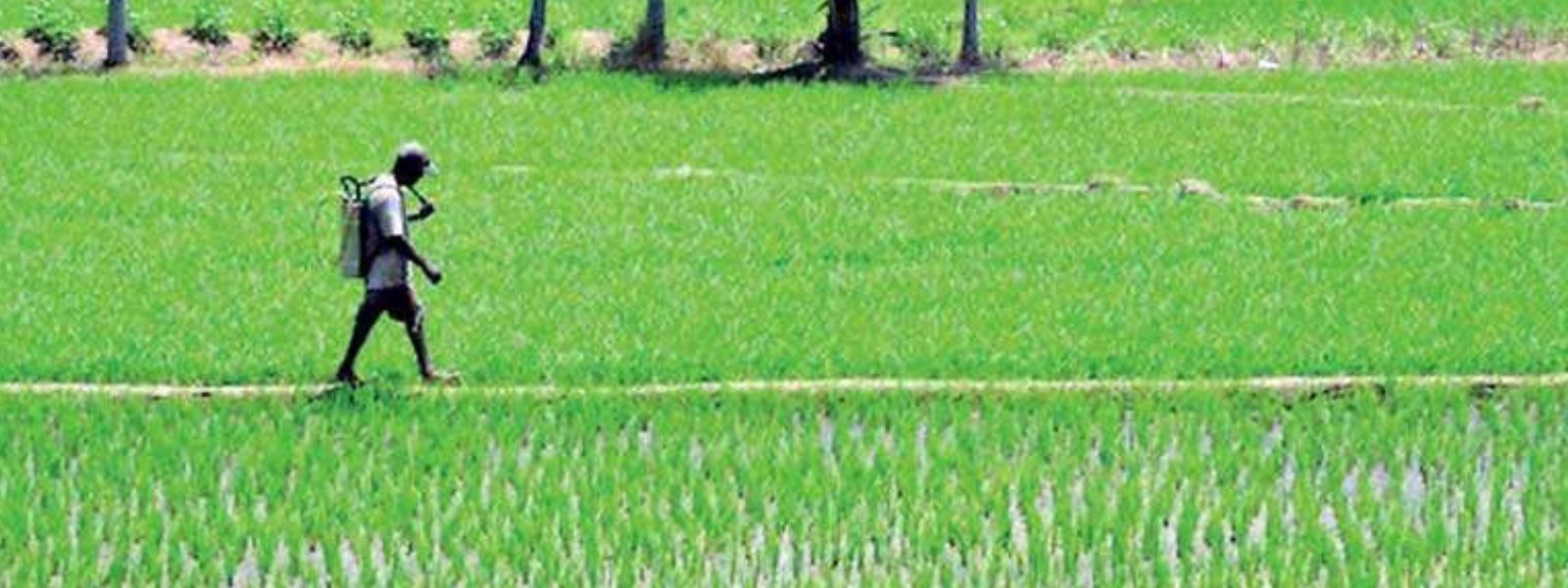
Government Maps Out New Future for Sri Lankan Agriculture



.png )
COLOMBO (News 1st); For generations, agriculture has remained the backbone of rural Sri Lanka.
Yet despite employing nearly a quarter of the country's workforce, using almost 40% of its land and receiving more than Rs. 200 billion annually in public investment and subsidies, the sector contributes only around 8.4% to the national economy.
Presenting the 2027 Budget, President Anura Kumara Dissanayake argued that these figures tell a deeper story about the challenges facing farmers and made it clear that the government intends to move beyond incremental changes and pursue a far-reaching transformation of the agricultural sector.
At the heart of the strategy is a push to attract greater private sector investment into large-scale agriculture, improve productivity, modernise value chains and expand access to local and international markets.
One of the most notable proposals will give owners of uncultivated and low-productivity paddy lands greater flexibility to use those lands for field crops and permanent crops following a comprehensive survey. To encourage cultivation on these underutilised lands, the government has allocated Rs. 1.55 billion.
The Budget also seeks to move farmers away from fragmented cultivation practices through a collective "Yaya" production model, under which farmers will work together when purchasing inputs, managing water resources, controlling pests and negotiating market prices. The government has allocated Rs. 400 million to launch the initiative.
In a further effort to modernise rural farming services, selected Agrarian Service Centres will be transformed into digital One-Stop Shops, equipped with technology platforms, machinery pools and real-time information systems designed to support farmers more efficiently. The pilot programme, covering five major farming districts, has received Rs. 250 million.
The government is also strengthening support for cooperative societies involved in paddy purchasing and rice production. An additional Rs. 300 million has been allocated on top of an existing Rs. 700 million food security allocation to help selected cooperatives purchase paddy from the Paddy Marketing Board, expand operations and acquire machinery required for rice processing.
Recognising the need to balance productivity with long-term soil health, the Budget introduces a four-year Integrated Plant Nutrient Management System aimed at promoting the combined use of chemical and organic fertiliser. An initial Rs. 47 million has been provided for the programme in 2027.
Meanwhile, one of the largest allocations in the sector comes through the fertiliser subsidy scheme. The government will continue providing Rs. 30,000 per hectare for paddy cultivation and has allocated Rs. 44 billion for the programme. The subsidy will also be extended to other crops cultivated on paddy lands from the 2026/27 Maha season.
The country's world-renowned cinnamon industry is also set to benefit, with Rs. 400 million allocated to strengthen the entire value chain, improve productivity and quality standards, and help Sri Lankan cinnamon gain greater access to international markets.
Other Articles


-862033_550x300.jpg)






Featured News




News 1st, MTV Channel (Pvt) Ltd, MBC Networks (Pvt) Ltd, 45/3, Braybrooke Street, Colombo-02.
T.P : +94 114 792 700,
Fax : +94 114 792 733
T.P : +94 114 792 700,
Fax : +94 114 792 733




 |  |  |
|---|---|---|
 |  |  |
 |  |  |
 |

