


Not Every SOE Should Remain in Government Hands, Says Deputy Minister



.png )
COLOMBO (News 1st); Sri Lanka's government is preparing a sweeping overhaul of state-owned enterprises, signaling that it no longer wants to be in the business of running hotels, trading companies and other non-essential commercial ventures.
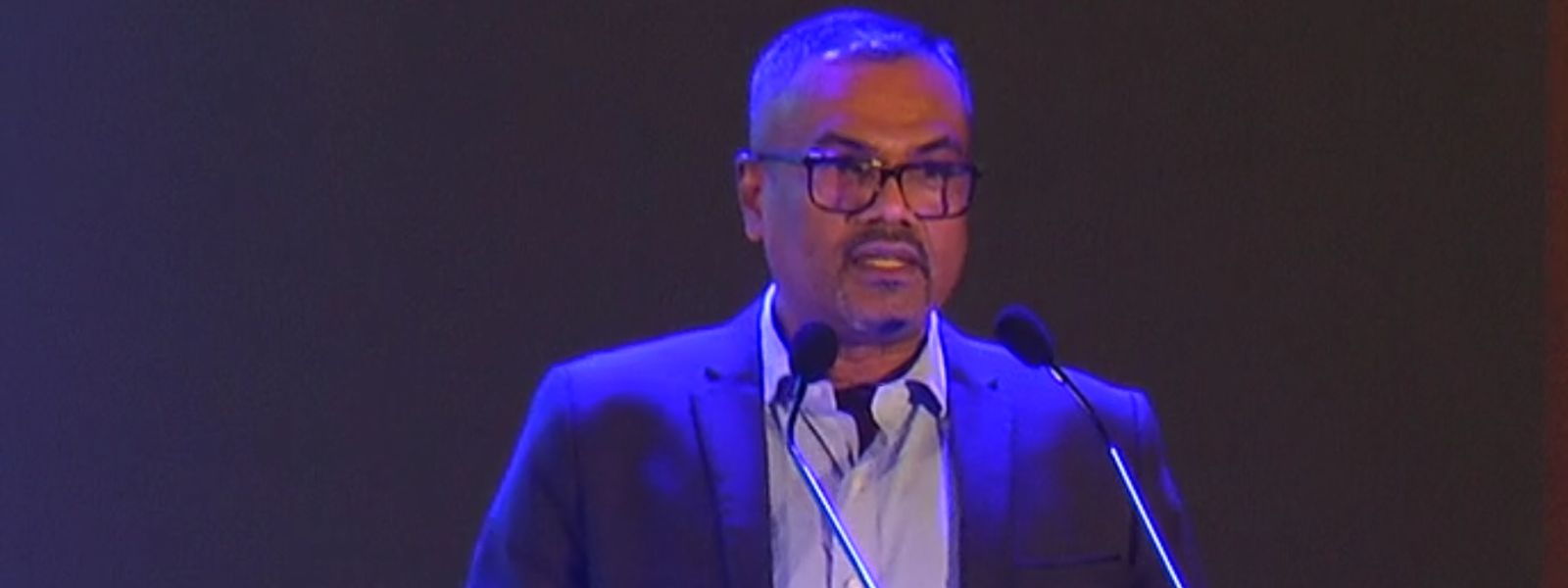
Speaking on the future of state-owned enterprises, Deputy Minister of Finance and Planning Anil Jayantha Fernando said the country currently has 527 entities classified as state-owned enterprises, although many of them are not engaged in traditional business activities.
According to the Deputy Minister, the label "state-owned enterprise" covers a broad range of institutions that have been classified under that category due to legal and administrative requirements, even though many do not function as commercial enterprises.
Fernando said the government's policy is increasingly focused on facilitating economic activity rather than directly participating in ordinary business operations.
"In fact, the state-owned enterprises that we have are not all enterprises in the true sense. We have 527 state-owned enterprises, but only a selected number are actually engaged in enterprise activities. Many others are performing different functions but are still labelled as state-owned enterprises due to legal and administrative requirements."
He stressed that the government has little interest in continuing to operate businesses involved in routine commercial activities.
"The government's policy is clear. We do not want to engage in ordinary economic activities such as trading, running hotels or similar businesses. The government's primary role is to facilitate."
The Deputy Minister revealed that a committee has already been appointed to formulate strategies for the future of state-owned enterprises, with reforms expected to vary according to the nature and strategic importance of each institution.
"If these entities are not linked to economic policy objectives or critical national strategies, we can reform them. A committee has already been appointed and it will come forward with the relevant strategies for these SOEs."
He noted that some enterprises could be divested, while others may be merged as part of a broader restructuring effort.
"Some of these SOEs can genuinely be divested. In other cases, mergers may be necessary. Those processes are now underway."
However, Fernando emphasized that not all state-owned entities would be removed from government control.
He explained that certain institutions, particularly those operating in strategically important sectors, may continue under state ownership, either independently or through partnerships with the private sector.
"Certain entities will be retained, in some cases with private sector collaboration and in others solely through government investment. One important consideration is preventing market manipulation. The government does not want to create opportunities for market manipulation, whether in the stock market or other sectors."
As a result, he said sectors such as energy and selected utility services are likely to remain under government involvement.
Looking ahead, Fernando also outlined plans for a new legal framework that could significantly change the way state-owned enterprises are managed.
"For example, a new SOE Act would facilitate separate management structures and allow institutions to be reorganised under a single umbrella framework. These organisations could be incorporated as limited liability companies, giving them greater autonomy and freedom to make decisions based on market conditions, risks and commercial realities."
While acknowledging that the reforms will take time, the Deputy Minister's comments offer the clearest indication yet that the government is preparing a far-reaching transformation of Sri Lanka's state sector, one that could reshape the role of hundreds of institutions and redefine where government involvement in business begins and ends.
Other Articles


-860599_550x300.jpg)




Featured News




News 1st, MTV Channel (Pvt) Ltd, MBC Networks (Pvt) Ltd, 45/3, Braybrooke Street, Colombo-02.
T.P : +94 114 792 700,
Fax : +94 114 792 733
T.P : +94 114 792 700,
Fax : +94 114 792 733




 |  |  |
|---|---|---|
 |  |  |
 |  |  |
 |

