.webp)


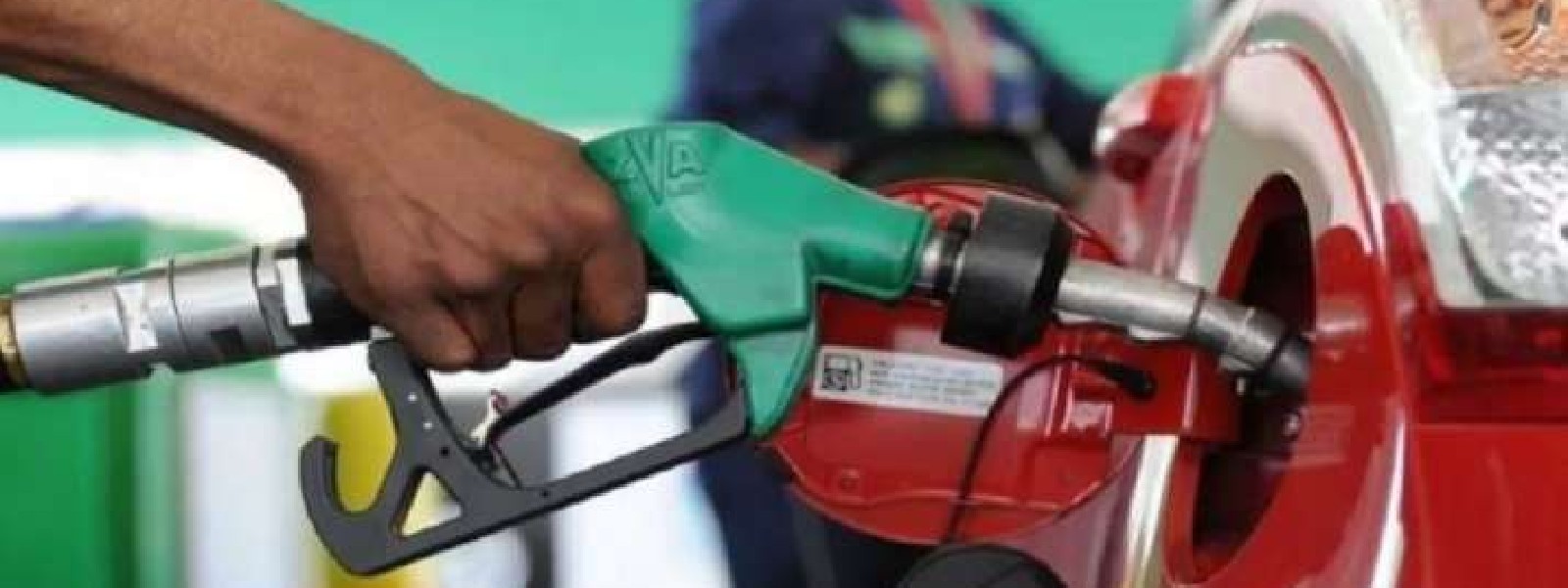
Government Signals Tough Action if Fuel Supply Issues Continue



.png )
COLOMBO (News 1st) - The government today (7) provided a detailed explanation in Parliament regarding the challenges currently affecting Sri Lanka's fuel market, as concerns continue to grow over reduced fuel distribution by several private fuel suppliers.
The issue was raised by Samagi Jana Balawegaya MP S.M. Marikkar, who questioned the government on reports of fuel shortages in several locations and sought clarification on the measures being taken to ensure uninterrupted fuel supplies without increasing fuel prices.
Marikkar noted that the Chairman of the Ceylon Petroleum Corporation (CPC) had recently stated that a fuel price increase would not be necessary unless there was a major disruption in the global market. He also pointed to reports of fuel shortages at dozens of locations and questioned what action the government intended to take if private fuel suppliers were contributing to supply disruptions.
Responding to the concerns, Minister of Energy Anura Karunathilaka said the current situation had arisen because international fuel prices had increased while local fuel prices had not been adjusted accordingly.
According to the Minister, the private fuel suppliers have argued that maintaining current prices has resulted in financial losses. He said some companies had requested that domestic fuel prices be increased in line with global market movements.
However, the government had decided against a price increase and instead introduced a subsidy of Rs. 70 per litre of diesel for the next three months in an effort to reduce the burden on fuel suppliers while protecting consumers.
Karunathilaka said some companies had nevertheless informed authorities that they continued to incur losses and had therefore reduced the quantities of fuel released to the market.
He explained that while existing agreements allow the government to require companies to maintain minimum fuel stocks within the country, the agreements do not permit authorities to direct companies on the exact quantities that must be supplied to individual filling stations.
As a result, the government's immediate response has been to increase fuel releases through the Ceylon Petroleum Corporation in order to ease pressure on the market.
The Minister revealed that CPC's market share, which previously stood at around 50 to 55 percent, has now increased to between 77 and 80 percent as the corporation expands its distribution to offset supply reductions elsewhere.
He added that private suppliers had already been informed of the need to ensure that fuel distribution continues in a manner that prevents market disruptions.
MP Marikkar subsequently questioned whether some companies were deliberately restricting fuel distribution and asked whether the government could intervene more aggressively if such actions were found to be intentional.
In response, the Energy Minister acknowledged that the government has powers to intervene if fuel imports to Sri Lanka are restricted.
However, he explained that the agreements signed with the private fuel suppliers, including the most recent agreements concluded in 2022, do not specifically address situations where fuel is not distributed to individual filling stations or particular regions.
Karunathilaka said that if the current situation continues and the relevant companies fail to cooperate, the government will seek legal advice on the next course of action.
He stated that any future decisions would be taken in accordance with existing agreements, the Petroleum Act, and the powers available to the Ministry.
Other Articles







Featured News




News 1st, MTV Channel (Pvt) Ltd, MBC Networks (Pvt) Ltd, 45/3, Braybrooke Street, Colombo-02.
T.P : +94 114 792 700,
Fax : +94 114 792 733
T.P : +94 114 792 700,
Fax : +94 114 792 733




 |  |  |
|---|---|---|
 |  |  |
 |  |  |
 |

.gif)