.webp)


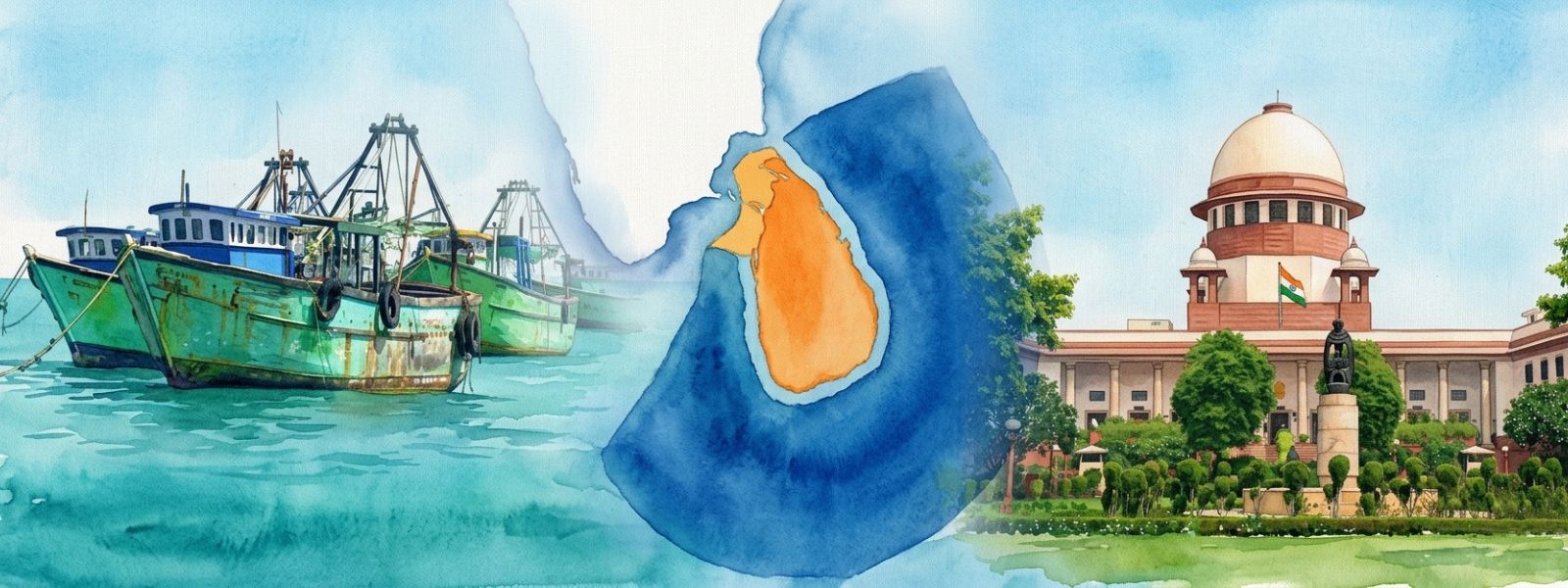
Stay Out of Sri Lankan Waters! Indian Supreme Court Tells Fishermen



.png )
COLOMBO (News 1st); India's Supreme Court has weighed in on the long-running fisheries dispute with Sri Lanka, urging government authorities to sensitise fishermen about international maritime boundaries amid growing concerns over repeated arrests by Sri Lankan authorities.
The Indian Supreme Court has called on the Central Government and the Tamil Nadu State Government to intensify efforts to educate and sensitise fishermen about the international maritime boundary with Sri Lanka, amid continuing arrests of Indian fishermen by Sri Lankan authorities for allegedly entering Sri Lankan territorial waters.
The observations were made during hearings on petitions challenging what petitioners described as the "unconstitutional ceding" of Katchatheevu Island to Sri Lanka under the Indo-Sri Lankan Maritime Agreement.
During proceedings, Indian Attorney General R. Venkataramani referred to the recurring issue of Tamil Nadu fishermen being arrested in Sri Lankan waters. Addressing arguments concerning declining fish stocks and environmental degradation along India's coastline, he stated that many fishermen were venturing into Sri Lankan waters because fish availability on the Indian side had diminished.
According to Venkataramani, overfishing and pollution had significantly impacted marine resources in Indian waters, prompting some fishermen to cross the maritime boundary despite repeated warnings.
He told the court that fishermen had been instructed not to enter Sri Lankan territorial waters, but continued to do so, fully aware of the risk of arrest.
Justice Sanjay Kumar observed that preventive measures were needed to avoid repeated arrests and suggested that authorities focus on educating fishermen about maritime boundaries and the consequences of crossing them.
The bench noted that one practical solution would be to ensure that fishermen clearly understood where the maritime boundary lies and refrained from venturing beyond it.
In a notable observation during the hearing, Justice Kumar remarked that Indian fishermen had extensively exploited fishing resources close to the Indian coast while Sri Lanka appeared to have exercised greater responsibility in protecting its coastal environment and fisheries.
Recalling a visit to Sri Lanka, the judge said he was struck by the level of civic consciousness demonstrated by the Sri Lankan public and suggested that stronger environmental stewardship may have contributed to healthier marine ecosystems on the Sri Lankan side of the maritime boundary.
The Attorney General also informed court that India continues to enjoy a strong relationship with Sri Lanka and stressed that New Delhi does not want the long-running dispute surrounding the maritime agreement to adversely affect bilateral ties.
He said diplomatic channels remain active and that both countries continue to engage on the issue through ongoing discussions and negotiations.
The dispute over fishing rights in the Palk Strait has remained a sensitive issue for both India and Sri Lanka for decades, particularly for fishing communities in Tamil Nadu and Sri Lanka's Northern Province.
Sri Lankan authorities have repeatedly maintained that foreign fishermen entering Sri Lankan territorial waters violate maritime laws and pose a threat to local fishing resources, while Indian fishermen have argued that shrinking fish stocks and traditional fishing practices often draw them toward the contested waters.
The Indian Supreme Court is scheduled to hear the matter again in February 2027, as legal challenges concerning Katchatheevu and the wider fishing dispute continue to attract political and diplomatic attention in both countries.
Other Articles










Featured News




News 1st, MTV Channel (Pvt) Ltd, MBC Networks (Pvt) Ltd, 45/3, Braybrooke Street, Colombo-02.
T.P : +94 114 792 700,
Fax : +94 114 792 733
T.P : +94 114 792 700,
Fax : +94 114 792 733




 |  |  |
|---|---|---|
 |  |  |
 |  |  |
 |

.gif)