.webp)


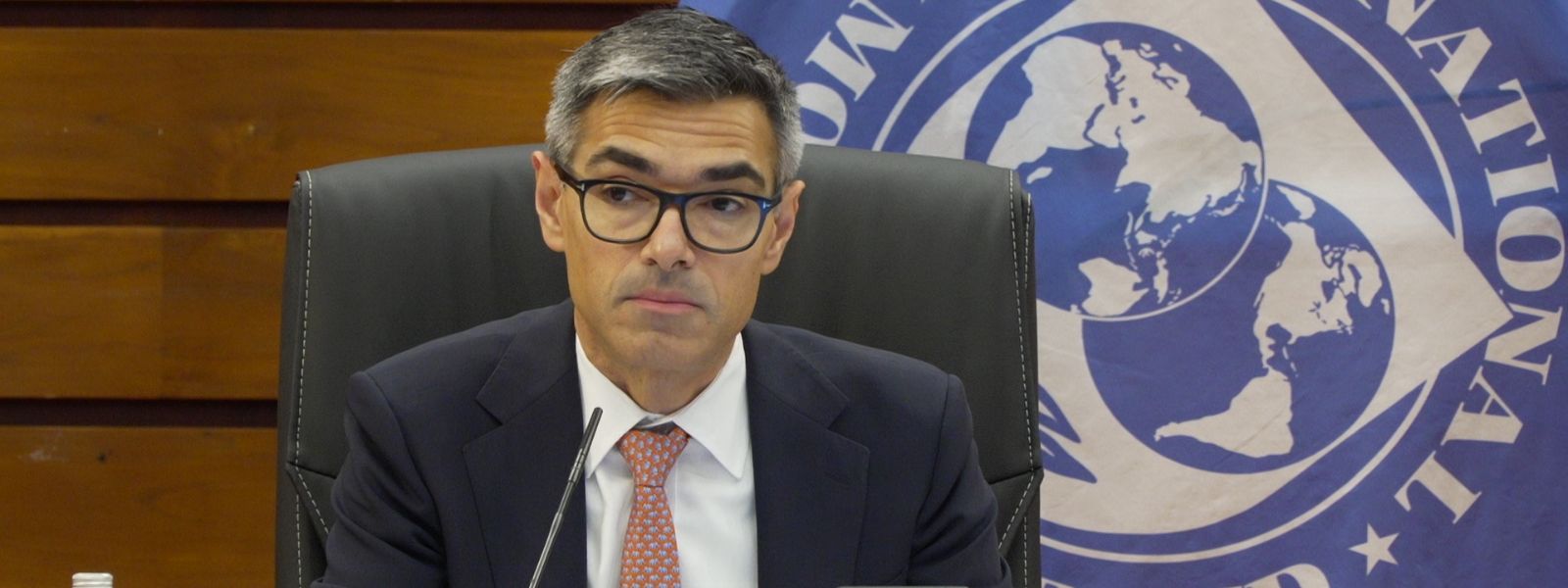
Don’t Weaken Key Anti-Corruption Safeguards, Says IMF



.png )
COLOMBO (News 1st); Sri Lanka should ensure that recent progress in its fight against corruption is not weakened by proposed legislative changes, the International Monetary Fund's Mission Chief for Sri Lanka, Evan Papageorgiou, has said, while praising the country for making significant advances in governance and anti-corruption reforms in recent years.
Papageorgiou said the country has taken major steps to strengthen its governance framework and improve transparency, describing its overall direction as positive and encouraging.
He pointed to the Anti-Corruption Act adopted in 2023 as a landmark reform that significantly strengthened Sri Lanka's legal framework against corruption. He also highlighted the Proceeds of Crimes Act introduced in 2025, which enhanced the country's ability to recover assets linked to criminal activity.
Papageorgiou further noted that Sri Lanka became the first country in Asia to undergo an IMF Governance Diagnostic Assessment, a process that brought together government institutions, development partners and civil society to identify governance weaknesses and formulate a comprehensive reform agenda. The recommendations from that assessment subsequently evolved into a governance action plan that continues to be periodically updated and monitored through progress reports.
The IMF official said several other governance reforms have also been implemented, including efforts to strengthen the asset declaration regime, publication of beneficial ownership information, improvements to revenue administration, greater transparency in public procurement processes and the finalization of the tax exemptions framework this year. He said the tax exemptions framework helps establish clear rules governing tax concessions and incentives, reducing uncertainty and minimizing perceptions of corruption.
According to Papageorgiou, governance and anti-corruption measures continue to play a central role in the IMF programme. As part of the ongoing Seventh Review, Sri Lanka is expected to implement a series of governance-related structural benchmarks, including the verification of beneficial ownership information submitted to the beneficial ownership registry, the verification of information relating to registered companies, the reduction of face-to-face customs declaration reviews for authorized economic operators, and the continued publication of public procurement information.
He said studies, governance indicators and the IMF's own discussions with civil society groups indicate that Sri Lanka's efforts to improve governance and combat corruption are producing results. According to Papageorgiou, there is clear evidence that perceptions are improving and that the country is moving in the right direction.
While expressing support for reviewing the Anti-Corruption Act to incorporate lessons learned since its introduction in 2023, Papageorgiou cautioned that certain clauses contained in proposed amendments presented in July 2026 could undermine some of the key strengths that made the legislation effective.
He explained that the IMF's concerns primarily relate to the asset declaration framework and broader transparency mechanisms. The Fund believes that some proposed changes could restrict the use of asset declarations in a manner that may affect public debate and weaken accountability.
The IMF Mission Chief also raised concerns about proposals that would significantly expand discretion over what information is published instead of relying on clear rules-based criteria. In addition, he warned that narrowing the coverage of asset declarations could leave gaps within the transparency framework.
Papageorgiou said the IMF's message to the authorities is to carefully reconsider these provisions to ensure they do not reverse the progress already achieved. He emphasized that anti-corruption efforts should remain a national priority and that reforms should continue to strengthen, rather than dilute, accountability and transparency.
Despite those concerns, Papageorgiou reiterated that Sri Lanka's anti-corruption and governance reforms are moving in the right direction and have delivered measurable improvements. However, he stressed that preserving the integrity of the country's anti-corruption framework remains critical to maintaining public trust and ensuring that the momentum of recent reforms is not lost.
Other Articles

-856323_550x300.jpg)






Featured News




News 1st, MTV Channel (Pvt) Ltd, MBC Networks (Pvt) Ltd, 45/3, Braybrooke Street, Colombo-02.
T.P : +94 114 792 700,
Fax : +94 114 792 733
T.P : +94 114 792 700,
Fax : +94 114 792 733




 |  |  |
|---|---|---|
 |  |  |
 |  |  |
 |

.gif)