.webp)


Judicial Appointments on Hold Due to Easter Attacks Case



.png )
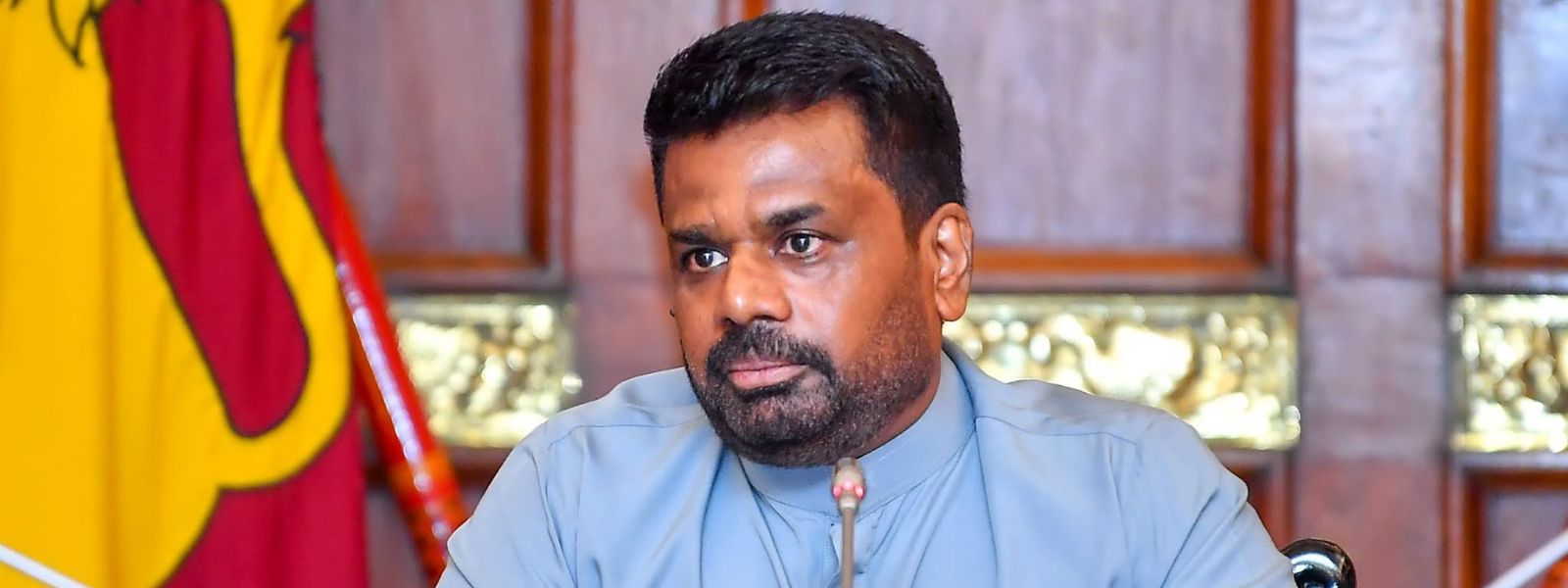
COLOMBO (News 1st); Sri Lanka President Anura Kumara Dissanayake has explained why several vacancies in Sri Lanka's superior courts have remained unfilled, stating that decisions regarding judicial appointments were closely linked to the progress of the Easter Sunday attacks case and the need to ensure fairness in the judicial process.
The President made the remarks while responding to concerns over delays in filling vacancies within the higher judiciary, emphasizing that the process would be completed within the next month.
"I will complete that process within about a month. That is a definite commitment. Let me explain this very clearly."
The President pointed out that the Easter Sunday attacks case remains one of the most significant and complex cases currently before the courts.
"There is the Easter Sunday Attacks case. It contains around 23,000 charges and nearly 3,000 witnesses. The most senior judge currently serving in the High Court is sitting on that Trial-at-Bar."
He noted that the judge concerned is next in line for promotion to the Court of Appeal, creating a difficult situation that required careful consideration.
"He is next in line for promotion to the Court of Appeal. When I looked into the matter, I found that the case is now in its final stages."
"If we are to appoint him to the Court of Appeal, you know what impact that would have on the case. On the other hand, if we delay his promotion, we must also consider whether it would be unfair to him to continue serving on a special trial while his career progression remains on hold."
The President said balancing those competing considerations was central to the decision-making process.
"That is the issue I had to consider."
President Dissanayake further explained that he had also examined concerns regarding appointments from the Court of Appeal to the Supreme Court and found that the circumstances were different.
"Then the question arises as to why a similar impact does not exist with appointments from the Court of Appeal to the Supreme Court. I examined that as well. The number of judges in the Supreme Court has gradually decreased over time. The real challenge exists at the Court of Appeal level."
According to the President, the Court of Appeal currently faces greater staffing pressures, making it impractical to promote large numbers of judges while leaving vacancies behind.
"After comparing the two situations, I concluded that it would not be appropriate to transfer a group of judges from the Court of Appeal to the Supreme Court while leaving vacancies in the Court of Appeal."
Rejecting suggestions that the vacancies had been intentionally kept open to benefit any particular individual, President Dissanayake insisted that the Easter Sunday attacks case was the sole reason for the delay.
"Therefore, I want to state very honestly that I did not leave these vacancies open while waiting for a particular individual to retire or become eligible for appointment. These vacancies remained because of the Easter Sunday Attacks case, which is of enormous importance to society. My only objective was to ensure fairness in relation to that matter."
Other Articles

-850783_550x300.jpg)
-850777_550x300.jpg)
-850744_550x300.jpg)
-850738_550x300.jpg)




Featured News


-849213_550x300.jpg)

-848028_550x300.jpg)
News 1st, MTV Channel (Pvt) Ltd, MBC Networks (Pvt) Ltd, 45/3, Braybrooke Street, Colombo-02.
T.P : +94 114 792 700,
Fax : +94 114 792 733
T.P : +94 114 792 700,
Fax : +94 114 792 733




 |  |  |
|---|---|---|
 |  |  |
 |  |  |
 |

.gif)