.webp)


"Don't Pour Gasoline on the Fire": IMF's Policy Warning to Governments



.png )
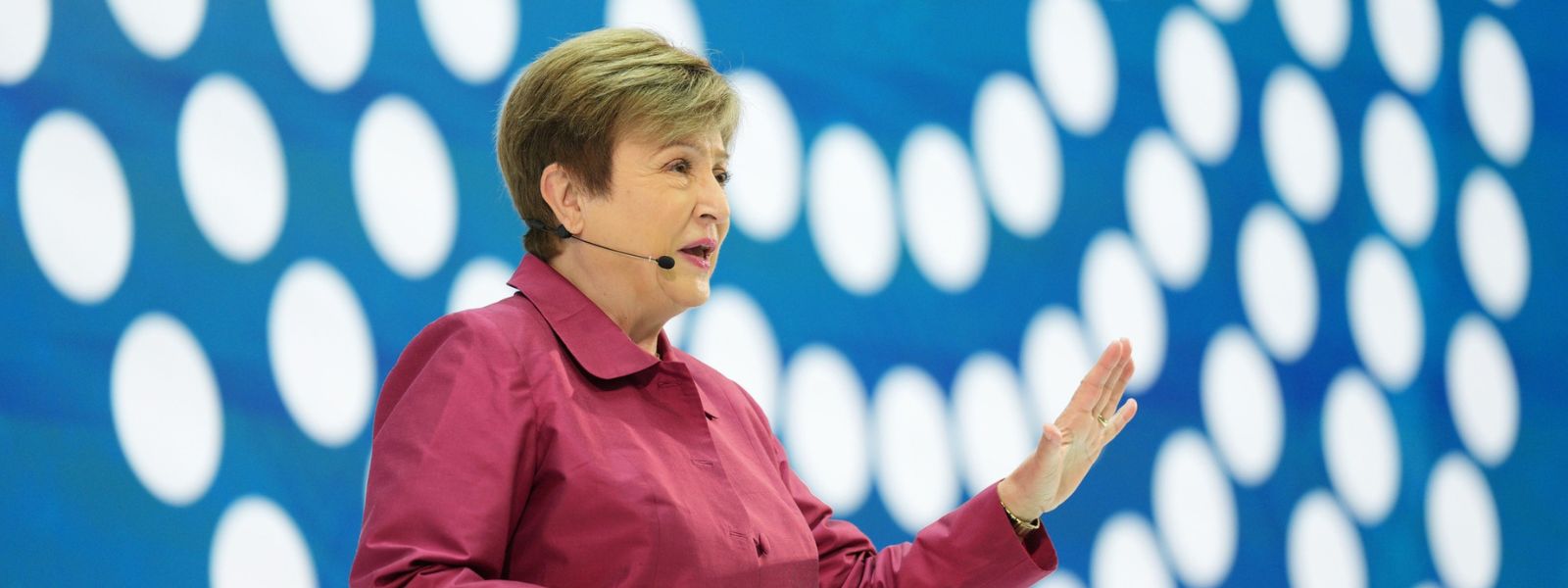
COLOMBO (News 1st); Countries facing today’s global economic turbulence must accept that some pain is unavoidable, as the world confronts a classic negative supply shock, International Monetary Fund Managing Director Kristalina Georgieva has said, urging policymakers to avoid actions that could deepen the crisis.
Georgieva cautioned that demand adjustment will be necessary as supply constraints work their way through economies. “We cannot go through it without some pain,” she said, stressing that while policymakers have tools to respond, they must be careful not to make conditions worse.
She called on governments to reject go‑it‑alone measures such as export controls and price controls, warning that such actions can further disrupt global conditions. Using a blunt analogy, she said countries should not “pour gasoline on the fire,” noting that gasoline is needed to keep economies moving.
According to the IMF chief, the central challenge for policymakers will be determining if and when shifting conditions move the global economy from one state to another, requiring a change in policy stance.
For the moment, she said, there is value in waiting and watching. Central banks should emphasize their commitment to price stability while otherwise remaining on hold, with a stronger bias toward action if their credibility comes into question. At the same time, fiscal authorities should focus on providing targeted and temporary support to vulnerable groups, ensuring that such measures are aligned with medium‑term fiscal frameworks.
Georgieva warned, however, that if inflation expectations threaten to break anchor and spark a costly inflation spiral, central banks must respond decisively with interest rate hikes. Fiscal support in such a scenario should continue to be targeted and temporary. While acknowledging that rate increases would further dampen economic growth, she said that outcome is “the right price to pay for price stability.”
She added that a more complex scenario could emerge if a severe tightening of financial conditions introduces a negative demand shock on top of the existing supply shock. In that case, monetary policy would face a delicate balancing act, while fiscal policy, only where fiscal space exists, would need to shift toward carefully calibrated demand support.
Other Articles








Featured News




News 1st, MTV Channel (Pvt) Ltd, MBC Networks (Pvt) Ltd, 45/3, Braybrooke Street, Colombo-02.
T.P : +94 114 792 700,
Fax : +94 114 792 733
T.P : +94 114 792 700,
Fax : +94 114 792 733




 |  |  |
|---|---|---|
 |  |  |
 |  |  |
 |

.gif)