.webp)


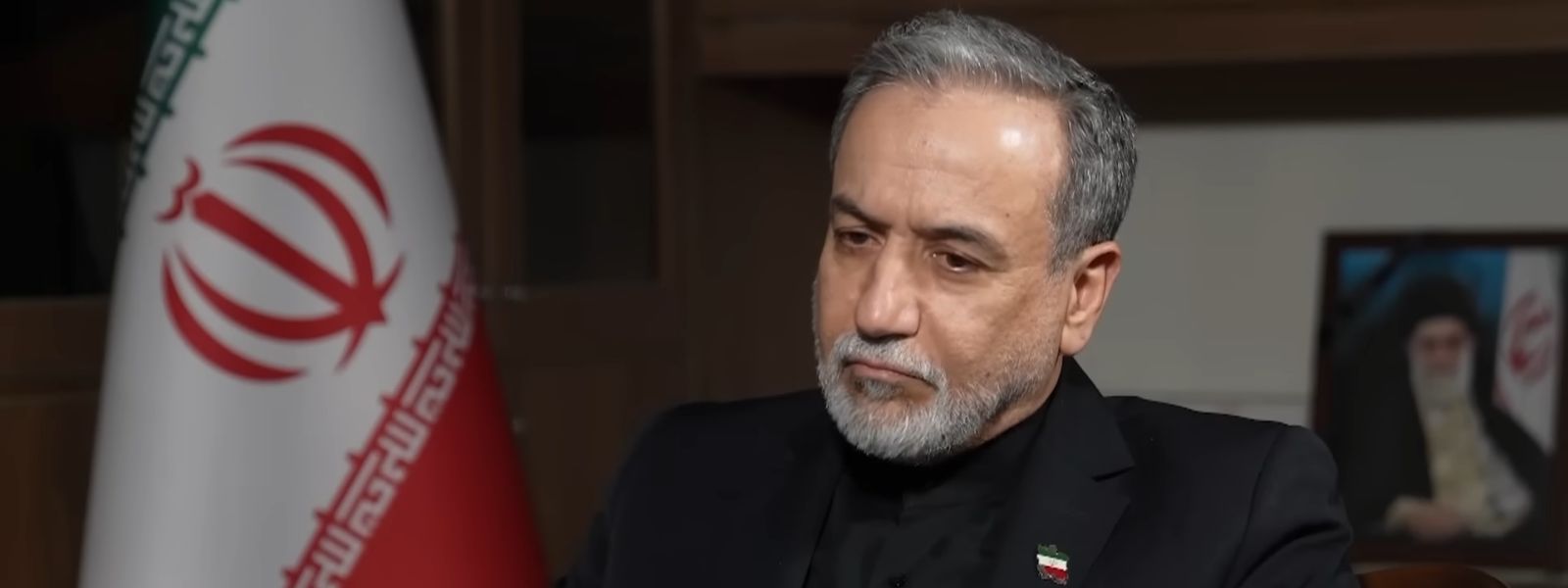
Iran Says US Responsible for Strait of Hormuz Crisis



.png )
COLOMBO (News 1st); Iran has rejected claims that it is deliberately escalating the conflict into a regional or international crisis, placing responsibility squarely on the United States and accusing Washington of turning the war into a regional confrontation.
Speaking to Al Jazeera’s Ali Hashem, Iranian Foreign Minister Abbas Araghchi dismissed analyses suggesting that Iran was intentionally expanding the American‑Israeli war by threatening key maritime routes, including the Strait of Hormuz.
“Did we start it? We did not start it,” Araghchi said. “This war was imposed on us and we had warned about it in advance.”
He said Iran had not sought to turn the conflict into a regional war, arguing instead that attacks were being launched from within the region itself.
“We did not turn this into a regional war simply because attacks are coming from countries in the region. Their military bases in the region are being used against us,” he said. “It is the United States that has turned it into a regional war, not us.”
Addressing concerns over the Strait of Hormuz, Araghchi responded to questions about Iran’s stated position that passage would remain open except to enemies, as well as reports suggesting conditions such as transactions in yuan or the potential involvement of Yemen and the Bab‑el‑Mandeb Strait.
“I will repeat: this war is not our war. We did not start it,” Araghchi said. “The United States started it and is responsible for all the consequences of this war, human and financial, whether for Iran, for the region, or for the entire world.”
He described the Strait of Hormuz as a waterway adjacent to Iran, saying the country would not allow its enemies to use it, particularly while fighting continues in the surrounding area.
“Naturally, we will not allow our enemies to use this waterway,” he said, adding that insecurity caused by the war itself has led many ships and countries to avoid the route.
Araghchi said some countries have contacted Iran to discuss safe passage through the Strait, and that Tehran has attempted to facilitate such passage under specific conditions.
“In my view, we need to design new arrangements for the Strait of Hormuz and the way ships pass through it in the future after the war,” he said. “Peaceful navigation through this waterway must be permanently maintained under clear regulations, with consideration for Iran’s interests and the interests of the region.”
He said the first step after the war should be drafting a new protocol for the Strait of Hormuz, to be agreed upon by countries on both sides of the waterway, which he described as the principal stakeholders.
When pressed on whose conditions would govern such an arrangement, Araghchi said they would be conditions that ensure peace and prevent future conflict.
“We do not want to witness another war in the region and we do not want to see the Strait closed again,” he said. “There must be regulations and conditions established that guarantee lasting peace in this region.”
Responding to comments by US President Donald Trump suggesting potential movement toward a resolution, Araghchi said Washington was waiting for Iran to take the first step, but argued the United States itself was unclear about its objectives.
“In my view, the Americans were drawn into this war by Israel, or more precisely by Netanyahu himself,” he said. “I think they themselves do not even know what their ultimate objective is.”
Araghchi said US rhetoric had shifted repeatedly, citing calls for regime change, the division of Iran, government collapse, and unconditional surrender.
“All this was based on a miscalculation,” he said, adding that those who once demanded Iran’s unconditional surrender are now seeking assistance to reopen the Strait of Hormuz.
“The United States started this war and must also acknowledge that it made a mistake and put an end to its aggression,” Araghchi said. He stressed that Iran is not seeking a ceasefire, arguing that such an outcome could lead to renewed conflict in the future.
“We want the war to end completely and permanently,” he said.
Other Articles




-831264_550x300.jpg)




Featured News




News 1st, MTV Channel (Pvt) Ltd, MBC Networks (Pvt) Ltd, 45/3, Braybrooke Street, Colombo-02.
T.P : +94 114 792 700,
Fax : +94 114 792 733
T.P : +94 114 792 700,
Fax : +94 114 792 733




 |  |  |
|---|---|---|
 |  |  |
 |  |  |
 |

.gif)