.webp)


Surgeries Restart in Chilaw After Cyclone Damage



.png )
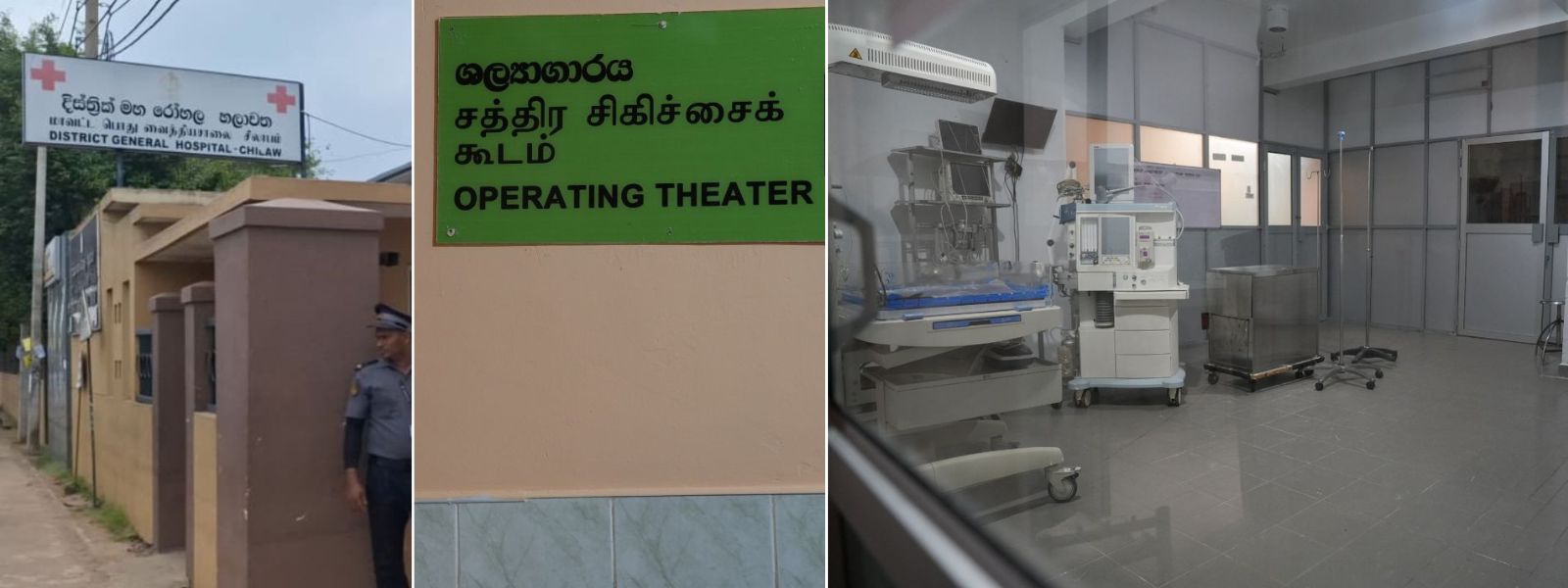
COLOMBO (News 1st); Surgical services have officially resumed at the District General Hospital, Chilaw, marking a critical step in Sri Lanka’s post-disaster recovery following the devastating impact of Cyclone Ditwah.
The return to full surgical operations comes after emergency repair work, supported by UNFPA, restored the hospital’s damaged operating theatre—ensuring uninterrupted access to life-saving maternal and newborn care for hundreds of patients every month.
The hospital, a key referral centre serving thousands in the region, was among several health facilities severely affected when Cyclone Ditwah triggered extensive flooding across Sri Lanka. The disaster disrupted vital health services nationwide, striking at a time when demand for emergency and obstetric care remained high.
Among the most critically damaged facilities was the hospital’s main operating theatre, a cornerstone of surgical, obstetric, and neonatal care. Floodwaters inundated the premises, damaging wall cladding panels, internal partitions, doors, and structural components, and rendering the space unsuitable for maintaining the sterile conditions required for surgery.
Without swift intervention, the hospital risked prolonged suspension of essential surgical procedures—including emergency obstetric and neonatal interventions—placing vulnerable patients, especially pregnant women and newborns, at serious risk.
Responding without delay, UNFPA mobilized emergency support as part of its humanitarian response to Cyclone Ditwah. Working in close coordination with the Government of Sri Lanka and the Ministry of Health, UNFPA facilitated rapid restoration efforts to ensure the continuity of essential, life-saving health services. By 30 December 2025, less than three weeks after the initial damage assessment, the operating theatre was successfully restored.
The restoration included:
Replacement and repair of wall cladding panels
Repair of doors, locks, hinges, and floor fittings. Renovation of internal cabin structures using cladding boards and glass
These improvements were crucial in re-establishing a sterile operating environment—an absolute requirement for safe surgical, obstetric, and neonatal procedures.
The urgency of the repairs was driven by the hospital’s heavy caseload. According to hospital officials, approximately 500 pregnant women receive treatment each month at Chilaw District General Hospital.
Even at the height of the flooding, more than 150 in-house patients, including pregnant women, continued to receive care—highlighting the critical importance of restoring services without delay.
With the operating theatre now fully functional, sterilization procedures have recommenced, allowing surgeries to resume safely and ensuring continued access to maternal and newborn care for those who need it most.
Source: UNFPA
Other Articles


-824248_550x300.jpg)




Featured News
-822734_550x300.jpg)
-822716_550x300.jpg)
-822495_550x300.jpg)
-819380_550x300.jpg)

News 1st, MTV Channel (Pvt) Ltd, MBC Networks (Pvt) Ltd, 45/3, Braybrooke Street, Colombo-02.
T.P : +94 114 792 700,
Fax : +94 114 792 733
T.P : +94 114 792 700,
Fax : +94 114 792 733




 |  |  |
|---|---|---|
 |  |  |
 |  |  |
 |

.gif)