.webp)


-823892.jpg)
Coal Clash: Minister Defends Tender, Sajith Warns Loss



.png )
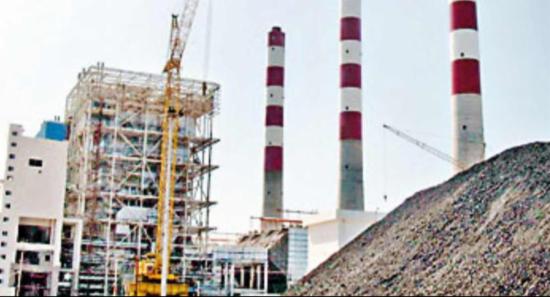
COLOMBO (News 1st); Sri Lanka’s Energy Minister Kumara Jayakody and Opposition Leader Sajith Premadasa clashed in Parliament over the country’s coal supply tender, with the government insisting the award followed “a proper tender procedure” and the Opposition alleging rushed timelines, diluted qualifications, and quality risks that could cost the state billions.
Energy Minister Kumara Jayakody accused the Opposition of stoking controversy after a long-held coal supply contract-previously “approved purely through Cabinet papers” and linked to figures “close to the former regime”-was awarded to a new supplier through what he described as Sri Lanka’s most competitive coal tender to date.
Opposition Leader Sajith Premadasa, however, questioned the timing, shortened bid window, eligibility thresholds, and coal quality specifications, warning of potential operational inefficiencies and a possible loss exceeding Rs. 10 billion if low-grade coal drives higher consumption at the country’s main coal-fired power plant.
“From 2023 until this tender was finally called, not a single valid tender process was conducted. The previous administration handed this entire supply contract, through a corrupt Cabinet approval, to one supplier who had no qualifications whatsoever.” — Energy Minister Kumara Jayakody
The Minister alleged the prior supplier had close links to the former regime, with approvals granted solely via Cabinet papers, without any tender.
He said the previous supplier had never supplied coal to any other country, lacked primary qualifications, technical capacity, and a proven track record, and used another company’s financials and supply credentials to secure Cabinet approval “back then.”
Jayakody maintained there was no political favouritism and no interference in the procurement process.
He acknowledged the bid preparation period was reduced to 21 days, stating this was done with the consent of the National Procurement Commission and the approval of the High-Level Procurement Committee.
The government extended the window by 7 additional days on bidders’ requests, bringing the total to 28 days.
He said he was tabling both documents—NPC consent and HLPC approval—before Parliament.
Jayakody said the primary qualification remained financial capability, with bidders required to show a minimum turnover of USD 150 million over the last three years.
The government did not change or relax the conditions, he said.
Ten bids were received—“the highest number of competitive bidders ever recorded in Sri Lanka’s coal supply history”—and the bid evaluation report can be tabled in Parliament.
Sri Lanka imported sufficient stocks until December last year, adequate until end-February, the Minister said.
Jayakody disputed that coal must have NCV 5900 kcal/kg, saying procurement generally specifies GCV—typically 5900 to 6150 or higher—with penalties for any deviation.
Load port inspection confirmed the coal met specifications at shipment.
Discharge port findings for the first shipment recorded GCV 5520; an independent inspection report has been received and will be tabled.
Under Clause 5.6, penalties are charged at double for deviations—~USD 2.79 million will be charged in this case.
A 10% performance bond of the 1.5 million tonne contract is held, ensuring penalty recovery, he said.
The second shipment reported GCV 6017, within range; the third shipment is being unloaded.
Other Articles








Featured News

News 1st, MTV Channel (Pvt) Ltd, MBC Networks (Pvt) Ltd, 45/3, Braybrooke Street, Colombo-02.
T.P : +94 114 792 700,
Fax : +94 114 792 733
T.P : +94 114 792 700,
Fax : +94 114 792 733




 |  |  |
|---|---|---|
 |  |  |
 |  |  |
 |

.gif)