


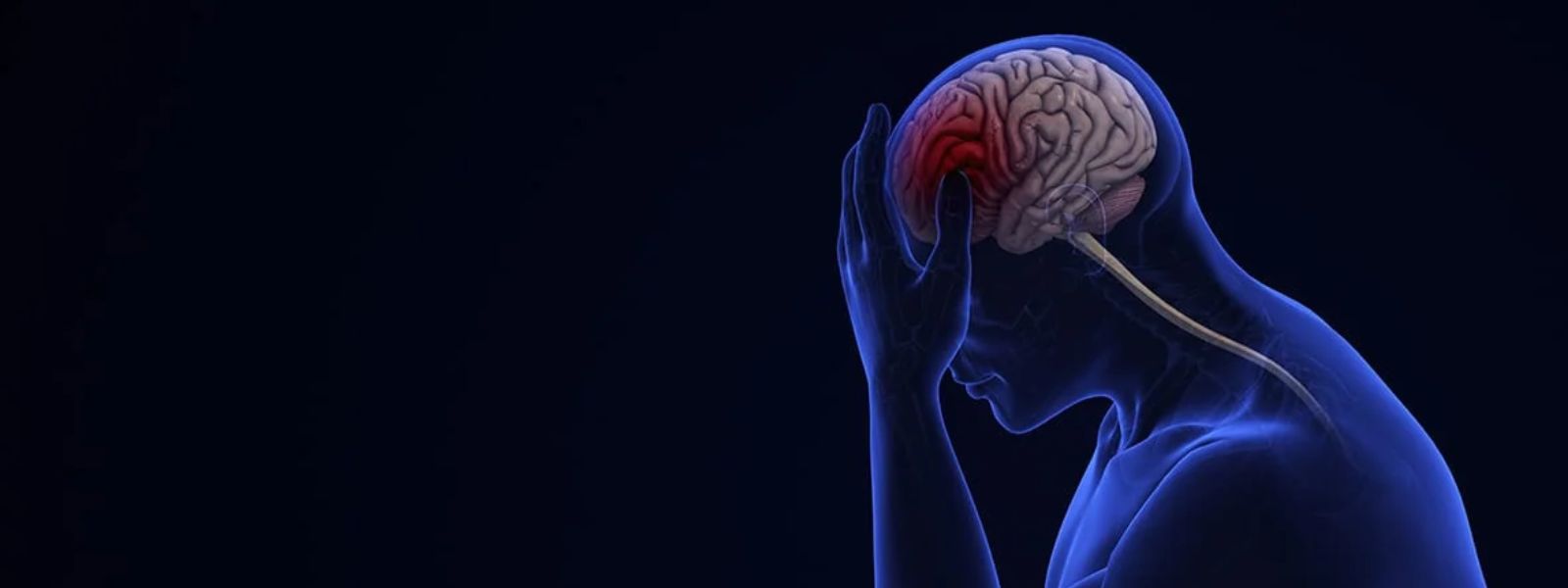
Stroke Strikes 60,000 Sri Lankans Every Year, Claims 4,000 Lives



.png )
COLOMBO (News 1st); A stroke can change a person's life in a matter of seconds.
It can rob someone of their ability to walk, speak, work, or even recognize their loved ones. Yet despite being one of Sri Lanka's most serious health threats, experts warn that many people still underestimate the devastating impact of the condition.
Marking World Stroke Day, President of the National Stroke Association of Sri Lanka, Dr. Gamini Pathirana, revealed that stroke remains one of the most common and dangerous illnesses affecting Sri Lankans today.
Speaking at a media briefing, Dr. Pathirana highlighted the scale of the challenge facing the country's healthcare system, noting that approximately 60,000 stroke patients are admitted to government hospitals each year. Of those, nearly 4,000 lose their lives annually.
According to the specialist, a stroke occurs when the brain's blood supply is interrupted, causing brain cells to die within a very short period of time.
"When the blood supply to the brain and its cells is disrupted, brain cells begin to die. This happens suddenly. That condition is what we call a stroke. It is a very common medical condition," he explained.
Dr. Pathirana noted that when blood flow to a specific part of the brain is blocked, the affected area dies, resulting in the loss of the functions controlled by that part of the brain.
"If blood supply to a section of the brain is blocked, that area dies. As a result, the functions carried out by that part of the brain stop. That is what we call a stroke."
He explained that one of the main causes is atherosclerosis, a condition in which fatty deposits build up inside blood vessels.
"This process can occur in blood vessels anywhere in the body, not just those supplying the brain. When it affects the heart, it causes a heart attack. When it affects the brain, it causes a stroke. In many ways, a stroke is the brain's equivalent of a heart attack."
The majority of strokes, he said, occur due to blocked blood vessels.
"The blockage type accounts for around 70 to 80 percent of cases. We see both major forms of stroke in our society, and many survivors are left living with severe weaknesses and disabilities."
Perhaps the most alarming statistic shared by the specialist was that one in four people faces a lifetime risk of developing a stroke.
"Approximately 25 percent of people, or one in every four individuals, have a lifetime risk of suffering a stroke. A health issue of this magnitude deserves serious public attention."
He warned that stroke continues to be a leading cause of death and disability worldwide and remains among the top causes of mortality in many countries.
Beyond the deaths, thousands more are forced to live with long-term physical and neurological impairments that dramatically alter their quality of life.
However, doctors say there is also a powerful message of hope.
According to Dr. Pathirana, nearly 90 percent of stroke cases are linked to preventable or controllable risk factors. Uncontrolled high blood pressure, diabetes, high cholesterol, smoking, obesity and chronic stress are among the leading causes contributing to the condition.
Health experts stress that maintaining healthy blood pressure levels, controlling diabetes, managing cholesterol, avoiding tobacco use, staying physically active and reducing stress can significantly lower the risk of suffering a stroke.
As Sri Lanka marks World Stroke Day, medical professionals are urging the public not only to recognize the warning signs of stroke but also to take preventive action before it is too late.
Because when it comes to stroke, every second matters, and in many cases, prevention remains the most powerful treatment of all.
Other Articles
-860732_550x300.jpg)
-860726_550x300.jpg)
-860720_550x300.jpg)

-860708_550x300.jpg)
-860702_550x300.jpg)




Featured News




News 1st, MTV Channel (Pvt) Ltd, MBC Networks (Pvt) Ltd, 45/3, Braybrooke Street, Colombo-02.
T.P : +94 114 792 700,
Fax : +94 114 792 733
T.P : +94 114 792 700,
Fax : +94 114 792 733




 |  |  |
|---|---|---|
 |  |  |
 |  |  |
 |

