


You’re Closer to an AI Future Than You Think : IMF Tells Sri Lanka



.png )
COLOMBO (News 1st); Sri Lanka is far closer to becoming an AI-powered nation than many may realize, according to a senior International Monetary Fund official, who says the country's digital transformation efforts are creating a foundation that could position it strongly in the next wave of technological innovation.
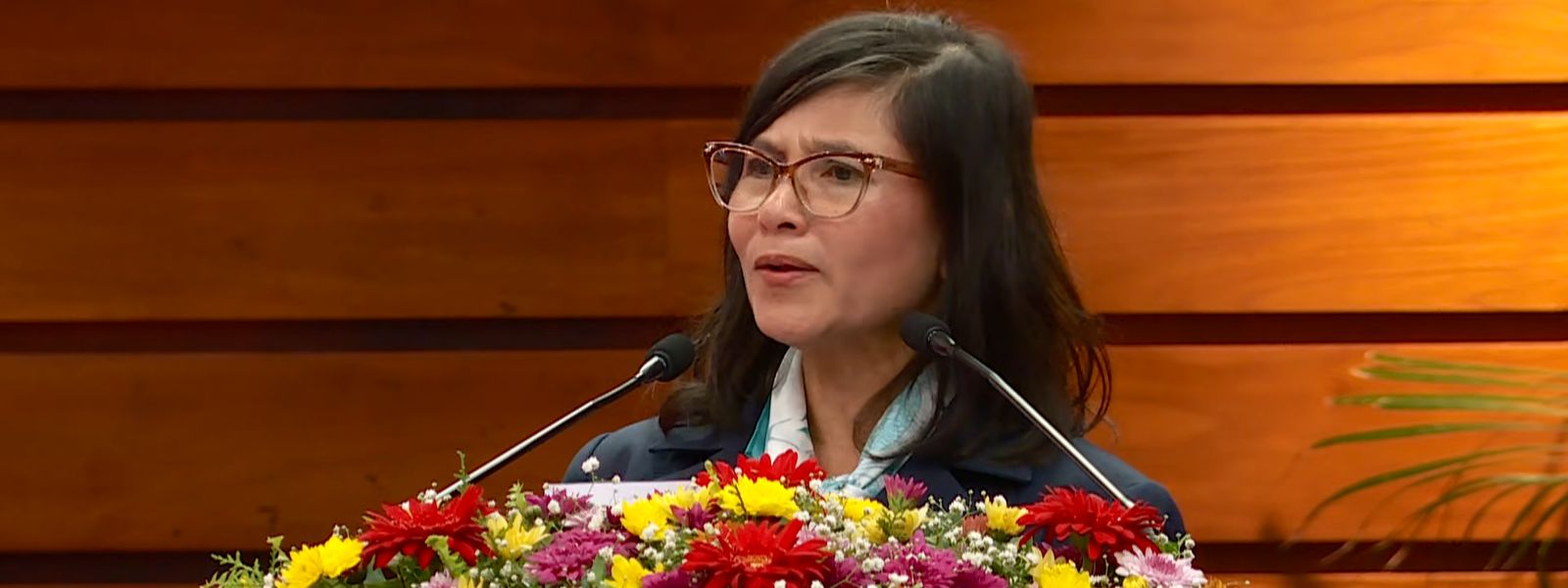
Delivering the 76th Anniversary Oration of the Central Bank of Sri Lanka, titled “The Intelligent Central Bank: Building Trust in the Age of AI,” Shirin Hamid, Chief Information Officer and Director of the Information Technology Department at the International Monetary Fund (IMF), offered a highly optimistic assessment of Sri Lanka's digital future.
Speaking about the country's progress, Hamid said Sri Lanka has used its recovery not merely to regain stability, but also to lay the groundwork for long-term transformation.
"What I see is a nation that has used its recovery not just to stabilize, but also to build," she said.
She highlighted Sri Lanka's digital economy blueprint, which aims to make digital transformation a central pillar of economic recovery through modernized public services, deeper financial inclusion, stronger private-sector innovation, improved competitiveness and sustained economic growth.
According to Hamid, the rapid expansion of digital public infrastructure is already changing how the country operates. Digital payments continue to grow at a significant pace, while interbank electronic fund transfers now account for nearly 70 percent of retail transaction volumes, compared with single-digit levels only a few years ago.
She also pointed to the increasing digitization of government services, noting that more than 60 percent of government revenue is now collected digitally. At the same time, Sri Lanka is moving forward with plans to launch a national digital identity system and is developing a national data exchange platform designed to facilitate secure information sharing across public and private institutions.
Hamid further noted that Sri Lanka's digital literacy rate stands at 72 percent, arguing that the country's continued investments in connectivity, skills development, legal frameworks and digital public infrastructure are simultaneously strengthening its readiness for artificial intelligence.
In one of the most striking observations of her address, the IMF technology chief suggested that Sri Lanka's size may actually work to its advantage in the AI era.
"Being smaller and newer can be an advantage. You're not dragging 50 years of legacy systems behind you," she said.
Hamid explained that modern technologies, including cloud-native systems, open-source models and cost-effective AI solutions, are now available to institutions of all sizes, making it possible for countries such as Sri Lanka to accelerate their technological development in ways that were previously impossible.
"A nation that rebuilt trust in living memory understands the value of what it is building on. Leapfrogging is not a slogan here. It is an option, and it is yours to exercise, but with judgment," she said.
While acknowledging the opportunities presented by artificial intelligence, Hamid cautioned that the challenge facing Sri Lanka is to harness the technology while safeguarding against its risks.
"The question before you now is how Sri Lanka protects against the risk of AI while becoming an AI-augmented institution. Sri Lanka has already shown that trust can be rebuilt. You can now use AI to make trust stronger."
Her message was clear: Sri Lanka's next chapter is not simply about digital transformation. It is about leveraging technology, strengthening public trust and positioning itself to compete in an increasingly AI-driven world. With digital infrastructure expanding, a national digital identity on the horizon and technological adoption accelerating, the country may be closer to that future than many think.
Other Articles

-860010_550x300.jpg)

-859998_550x300.jpg)





Featured News




News 1st, MTV Channel (Pvt) Ltd, MBC Networks (Pvt) Ltd, 45/3, Braybrooke Street, Colombo-02.
T.P : +94 114 792 700,
Fax : +94 114 792 733
T.P : +94 114 792 700,
Fax : +94 114 792 733




 |  |  |
|---|---|---|
 |  |  |
 |  |  |
 |

