.webp)


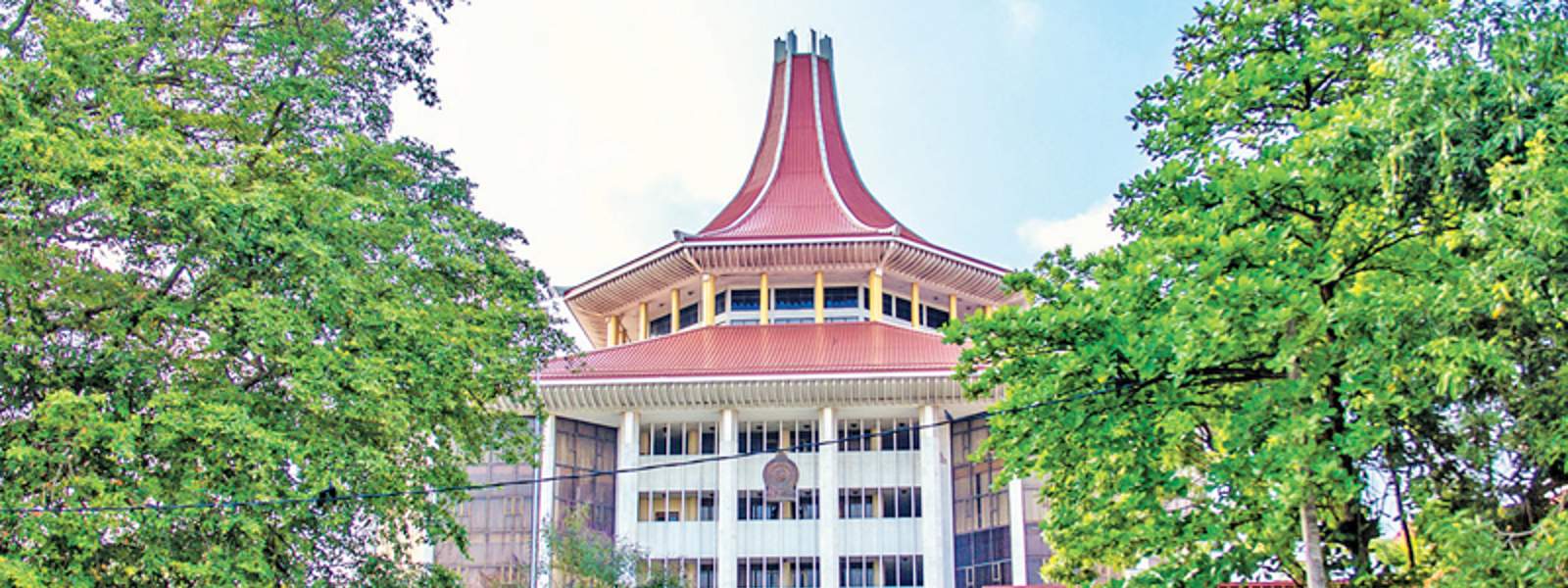
Referendum Required for Key Anti-Corruption Provision



.png )
COLOMBO (News 1st); The Supreme Court has determined that several provisions in the proposed Anti-Corruption (Amendment) Bill are inconsistent with the Constitution, Speaker of Parliament announced today.
Presenting the Supreme Court's determination to Parliament, the Speaker said most of the proposed amendments can be passed with a simple majority, but several key provisions would require a higher level of approval.
Among the provisions identified by the Court is the requirement for owners, chairpersons and directors of media institutions registered with the Ministry of Mass Media and entities licensed by the Telecommunications Regulatory Commission to declare their assets and liabilities. The Supreme Court has determined that this provision can only be enacted with a two-thirds majority in Parliament.
The Court has also ruled that any proposal to remove the requirement to disclose the assets and liabilities of a person who has lived in the same household for more than six months with an individual submitting an assets declaration would similarly require a two-thirds majority in Parliament.
Another provision identified by the Supreme Court relates to restrictions on bail for offences introduced under the proposed Anti-Corruption law. The Court has determined that the proposal preventing Magistrates from granting bail and imposing strict limitations on the granting of bail by the High Court cannot become law without approval by the people at a referendum, in addition to the required parliamentary approval.
The Speaker further informed Parliament that the remainder of the amendments contained in the Anti-Corruption (Amendment) Bill may be passed with a simple majority.
Other Articles

-856205_550x300.jpg)

-856193_550x300.jpg)




Featured News




News 1st, MTV Channel (Pvt) Ltd, MBC Networks (Pvt) Ltd, 45/3, Braybrooke Street, Colombo-02.
T.P : +94 114 792 700,
Fax : +94 114 792 733
T.P : +94 114 792 700,
Fax : +94 114 792 733




 |  |  |
|---|---|---|
 |  |  |
 |  |  |
 |

.gif)