.webp)


Why Must Sri Lanka Strengthen Buffers in an Uncertain World?



.png )
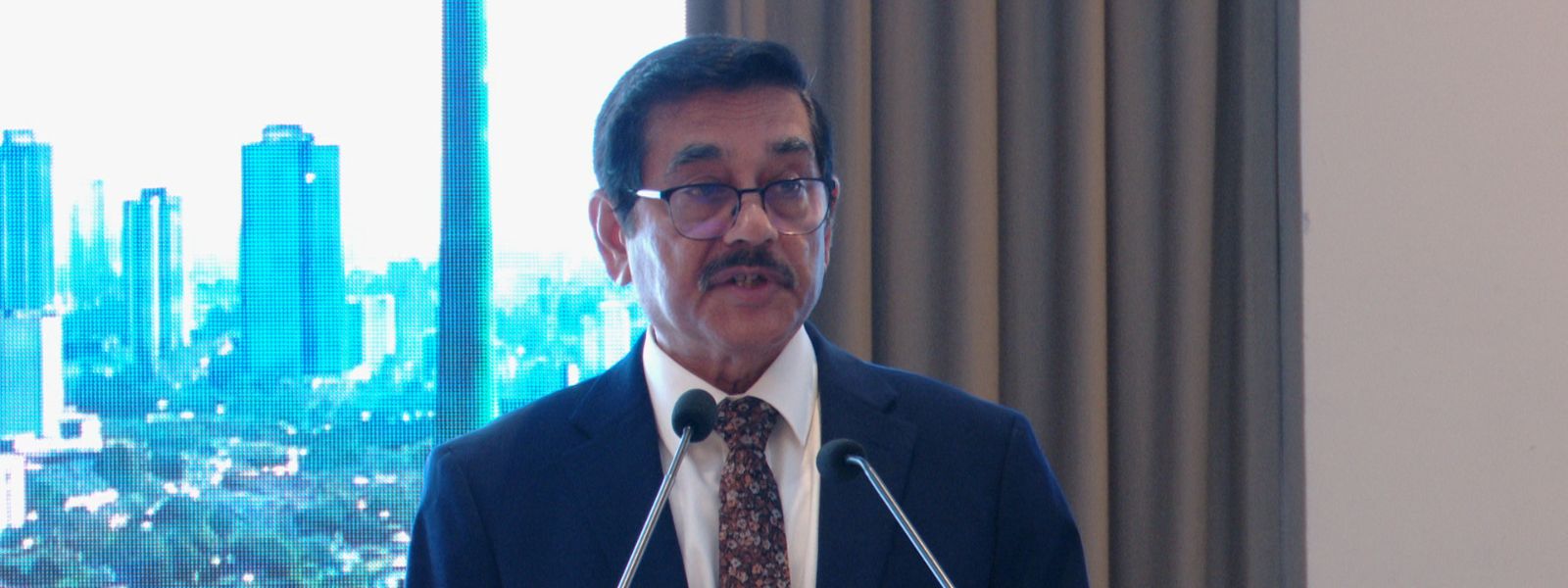
COLOMBO (News 1st) - Central Bank Governor Dr. Nandalal Weerasinghe has issued a strong warning that geopolitical uncertainty, global economic fragmentation and future external shocks require countries to fundamentally rethink how they build, manage and protect their foreign reserves, stressing that Sri Lanka's painful experience during the 2022 economic crisis serves as a powerful reminder of the consequences of inadequate financial buffers.
Delivering the keynote address at the Central Bank of Sri Lanka's inaugural Resource Management Conference, Dr. Weerasinghe said the world has entered a new era in which geopolitical developments can no longer be treated as external risks separate from economic and financial decision-making.
"The geopolitical risk can no longer be treated as something external to the investment process. It has become an integral part of reserve management," he said, noting that central banks around the world are increasingly being forced to account for political tensions, sanctions, trade disruptions and financial fragmentation when managing national reserves.
Drawing on Sri Lanka's own experience, the Governor recalled the severe economic crisis that engulfed the country in 2022, saying it clearly demonstrated the dangers of entering a period of turmoil without sufficient external buffers.
"Sri Lanka knows this particularly well. As the economic crisis in 2022 demonstrated, in the most tangible way, what happens when external buffers become inadequate. Reserves become critically low."
According to Dr. Weerasinghe, adequate foreign reserves should not be viewed as a luxury or optional safeguard, but rather as a fundamental component of national economic security and macroeconomic stability.
The Central Bank Governor noted that Sri Lanka has made considerable progress since the crisis through a comprehensive programme of macroeconomic stabilization and structural reforms, resulting in a significantly stronger external sector compared to the difficult period experienced during 2022 and 2023.
"Since the crisis, Sri Lanka has undertaken a comprehensive process of macroeconomic stabilization and structural reforms. It has demonstrated considerable resilience and the external sector has strengthened substantially compared with the difficult period that we had during 2022-2023."
However, Dr. Weerasinghe cautioned against complacency, noting that reserve accumulation is not a straightforward or permanent process. He pointed out that reserves can be built up during favourable economic conditions but depleted rapidly by unforeseen global developments.
"Building reserves is not a linear process. You can accumulate reserves during favourable periods, but external shocks can bring them down very quickly."
He emphasized that the key question for policymakers should no longer be limited to the size of reserves held by a country. Instead, governments and central banks should focus on the resilience, accessibility and usability of those reserves during times of stress.
"The relevant questions are not simply how much reserves do we have today. We must ask: How resilient are those reserves? How accessible are those reserves? How quickly can they mobilize liquidity? And ultimately, will they be sufficient for the next shock that we never know when it will materialize?"
The Governor explained that reserve accumulation cannot be viewed in isolation from the broader economy, particularly in emerging and developing nations such as Sri Lanka that have experienced severe reserve depletion.
"Reserve accumulation cannot be separated from the broader macroeconomic policy framework," he said, adding that rebuilding buffers requires patience, discipline and policy consistency.
He stressed that efforts to strengthen reserves must remain aligned with wider macroeconomic goals and should not come at the expense of overall economic stability.
"We can't accumulate reserves at any cost. We have to be very mindful about overall macroeconomic stability."
Outlining what he described as the key principles of modern reserve management, Dr. Weerasinghe said central banks must continue to prioritize the three traditional objectives of reserve management: safety, liquidity and return.
However, he argued that reserve adequacy should take precedence over the pursuit of higher returns.
"Before asking how to maximize returns, we must ensure that reserves are sufficient for their intended purposes. A portfolio that is too small cannot be made safe simply by earning a higher return."
He also highlighted the importance of diversification, warning that diversification should not become an objective in itself.
"Diversification can reduce concentration risk, but diversification for its own sake can introduce complexity and reduce liquidity. Therefore, diversification should be based on clearly identified risks and objectives."
Dr. Weerasinghe further argued that reserve management frameworks must evolve beyond traditional financial metrics to incorporate geopolitical realities, including jurisdictional risk, sanctions risk, settlement risk, counterparty risk, market-access risk and geopolitical concentration risk.
He stressed that reserve management can no longer remain static in a rapidly changing global environment.
"The optimal portfolio today may not be the optimal portfolio tomorrow."
According to the Governor, technology and faster learning will become increasingly important as central banks adapt to changing market conditions, evolving geopolitical relationships and shifting global financial cycles.
One of the central themes of his address was the importance of preparedness. Reflecting on lessons learned from recent crises, Dr. Weerasinghe repeatedly emphasized that buffers must be built before they are needed.
"The most important lesson from recent years is that buffers must be built before they are needed."
He warned that once a country enters an external crisis, opportunities to rebuild reserves become extremely limited.
"When a country is already facing an external crisis, it is too late to begin building reserves."
The Governor noted that reserve accumulation is easiest when economic conditions are favourable, capital inflows are strong and liquidity is abundant. Yet, he cautioned that these are often the very moments when policymakers are tempted to assume good conditions will last indefinitely.
"We should build buffers during good times because we know that good times will not last forever. Build for the rainy day."
Highlighting the broader lessons emerging from global economic uncertainty, Dr. Weerasinghe said geopolitical developments have permanently altered the operating environment for central banks and reserve managers.
"Geopolitical uncertainty has fundamentally changed the environment in which reserve management operates and has broadened our definition of risk."
He added that sustainable reserve accumulation remains a long-term process requiring strong economic fundamentals, policy credibility and institutional discipline.
"There's no shortcut to sustainable reserve accumulation."
The Central Bank Governor concluded by stressing that resilience cannot be achieved through a single asset, currency or investment strategy.
Instead, he said economic resilience is built through adequate buffers, prudent diversification, strong liquidity positions, credible institutions, flexible policy frameworks and international cooperation.
"Resilience cannot be created by one asset, one currency, one model or one strategy. It is created through adequate buffers, prudent diversification, strong liquidity, sound institutions, flexible policies and international cooperation."
Summing up the lessons of recent years, Dr. Weerasinghe delivered what may prove to be the defining message of his address.
"We do not build reserves because we expect a crisis. We build reserves because we cannot know when the next crisis will come."
At a time when geopolitical tensions, trade disruptions, financial volatility and global economic uncertainty continue to challenge economies around the world, the Central Bank Governor said the value of preparedness has never been greater, highlighting the need for Sri Lanka and other emerging economies to strengthen their defences long before the next shock arrives.
Other Articles
-854638_550x300.jpg)







Featured News




News 1st, MTV Channel (Pvt) Ltd, MBC Networks (Pvt) Ltd, 45/3, Braybrooke Street, Colombo-02.
T.P : +94 114 792 700,
Fax : +94 114 792 733
T.P : +94 114 792 700,
Fax : +94 114 792 733




 |  |  |
|---|---|---|
 |  |  |
 |  |  |
 |

.gif)