.webp)


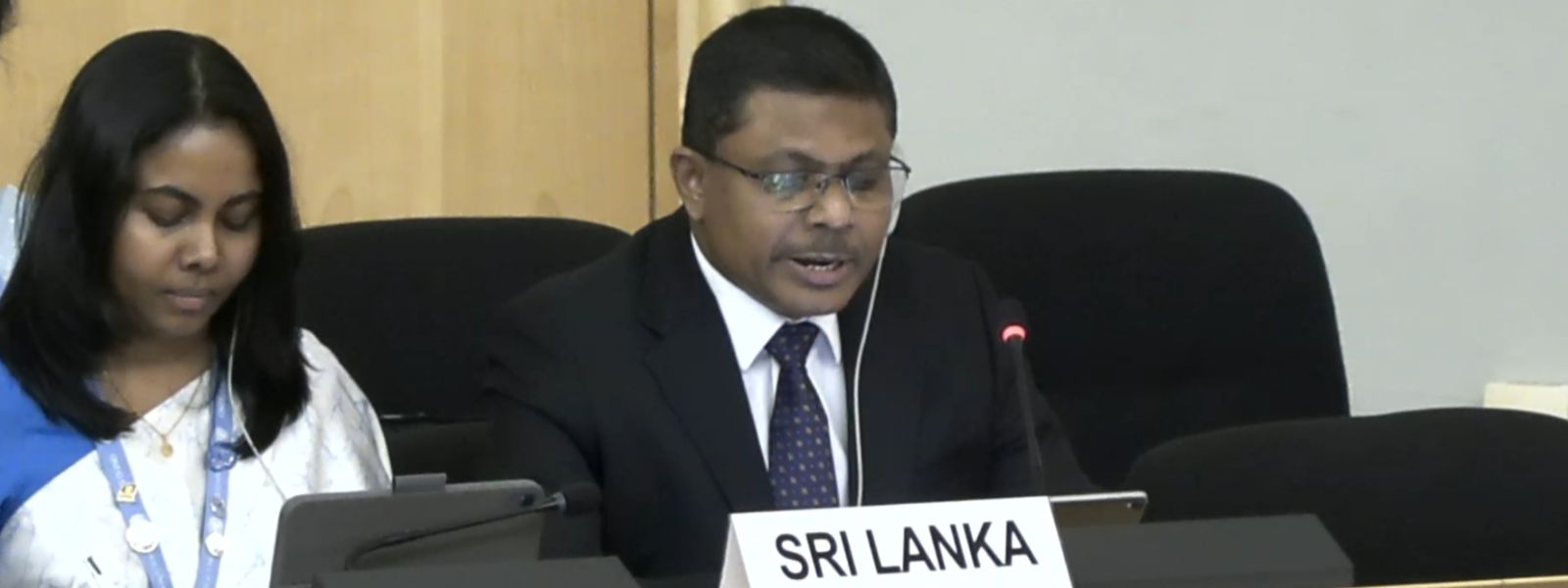
Journey of Healing Continues, Sri Lanka Tells UN Human Rights Council



.png )
COLOMBO (News 1st); Sri Lanka has told the United Nations Human Rights Council that the country remains committed to a nationally owned process of healing, reconciliation and reform, emphasizing that the end of conflict marked not the end of challenges but the beginning of a long and difficult journey toward rebuilding a united nation.
Addressing the Human Rights Council, the Permanent Representative to the United Nations, Ambassador Sumith Dassanayake, said Sri Lanka has consistently engaged with the Council and United Nations human rights mechanisms in a spirit of transparency and cooperation, while maintaining that sustainable progress in human rights, accountability and reconciliation must be nationally driven and responsive to domestic realities.
He noted that September marks two years since President Anura Kumara Dissanayake was elected on a mandate of economic, social and political transformation and said the Government has made significant progress despite numerous challenges, including the impact of Cyclone Ditwah and ongoing global economic uncertainties.
According to the Ambassador, Sri Lanka recorded real GDP growth of five percent in 2025 and has continued its anti-corruption drive through measures including strengthening the Commission to Investigate Allegations of Bribery or Corruption and implementing the National Anti-Corruption Action Plan 2025-2029.
Addressing the Human Rights Council's Resolution 60/1, Ambassador Dassanayake reiterated that Sri Lanka did not support the resolution, including provisions extending the mandate of the external evidence-gathering mechanism. He argued that such external mechanisms risk creating divisions and undermining national processes that are already underway.
He welcomed what he described as the Office of the High Commissioner for Human Rights' recognition of positive developments in Sri Lanka, including progress in criminal investigations, anti-corruption efforts, reconciliation initiatives and memorialization efforts.
The Ambassador outlined a series of reforms and initiatives undertaken by the Government over the past year.
He stated that, following consultations with the United Nations and international partners, the Prevention of Terrorism Act is to be repealed and replaced with new legislation designed to safeguard fundamental freedoms and prevent abuse. The proposed legislation is currently being finalized and is expected to be presented to Parliament in the coming month.
He also said stakeholder consultations on amendments to the Online Safety Act have been completed and that the proposed amendments are now being finalized.
According to Ambassador Dassanayake, independent reconciliation institutions including the Office on Missing Persons, the Office for Reparations and the Office for National Unity and Reconciliation continue to carry out their mandates with strengthened resources and support.
He further noted that the draft framework for a Truth and Reconciliation Commission is currently under review to prevent overlaps with the mandates of existing reconciliation institutions.
The Ambassador revealed that a committee headed by a Supreme Court judge continues to examine proposals for the establishment of an independent prosecutor's office, while an Inter-Ministerial Committee appointed by the Cabinet is reviewing issues relating to land release, valuation and compensation.
He also highlighted Cabinet approval for special immigration measures designed to facilitate the voluntary and safe return of Sri Lankan refugees in India who left the country during the conflict without valid travel documents.
Referring to long-standing grievances within the Malayaga Tamil community, Ambassador Dassanayake said the Government is, for the first time, addressing their concerns comprehensively and expeditiously.
He stressed that the Government remains committed to investigating and prosecuting any alleged unlawful act through independent national processes, regardless of an individual's social status or background.
According to the Ambassador, recent action in several high-profile cases, including the reopening of investigations and ongoing legal proceedings, demonstrates the Government's commitment to accountability and equal application of the law.
He also pointed to the Government's commitment to preventing any resurgence of racism, religious extremism or divisive politics, noting that this pledge has been repeatedly emphasized by President Dissanayake.
The Ambassador further highlighted efforts to strengthen the justice system, including proposed legal reforms to increase the number of judges and raise the retirement age of judges. These reforms, he said, are intended to improve efficiency, reduce case backlogs, retain judicial expertise and enhance access to justice across the country.
Addressing prison-related concerns, he said the Government is implementing accelerated measures to improve prison administration, reduce overcrowding and strengthen rehabilitation programmes. He added that a Committee of Inquiry is investigating recent incidents at Negombo Prison.
In one of the most significant portions of his address, Ambassador Dassanayake emphasized that Sri Lanka's post-conflict journey must be viewed as a long-term process.
"Sri Lanka has travelled a long and challenging road. The end of conflict marked not the end of challenges but the beginning of a long process of healing, rebuilding and reconciliation," he said.
He added that such a process requires recognition of progress, understanding and encouragement rather than approaches that undermine national ownership.
The Ambassador concluded by urging the Human Rights Council to assess Sri Lanka in a balanced, objective and constructive manner, consistent with the principles of the Council.
He said Sri Lanka remains committed to advancing justice, reconciliation, accountability and prosperity through national institutions and national processes, while seeking the support of the international community in its efforts to build a peaceful, reconciled and inclusive future for all citizens.
Other Articles
-854328_550x300.jpg)
-732603_850x460-854322_550x300.jpg)
-854303_550x300.jpg)




Featured News




News 1st, MTV Channel (Pvt) Ltd, MBC Networks (Pvt) Ltd, 45/3, Braybrooke Street, Colombo-02.
T.P : +94 114 792 700,
Fax : +94 114 792 733
T.P : +94 114 792 700,
Fax : +94 114 792 733




 |  |  |
|---|---|---|
 |  |  |
 |  |  |
 |

.gif)