.webp)


Middle East Must Shape Its Own Future : China's Xi Calls for a New Security Architecture



.png )
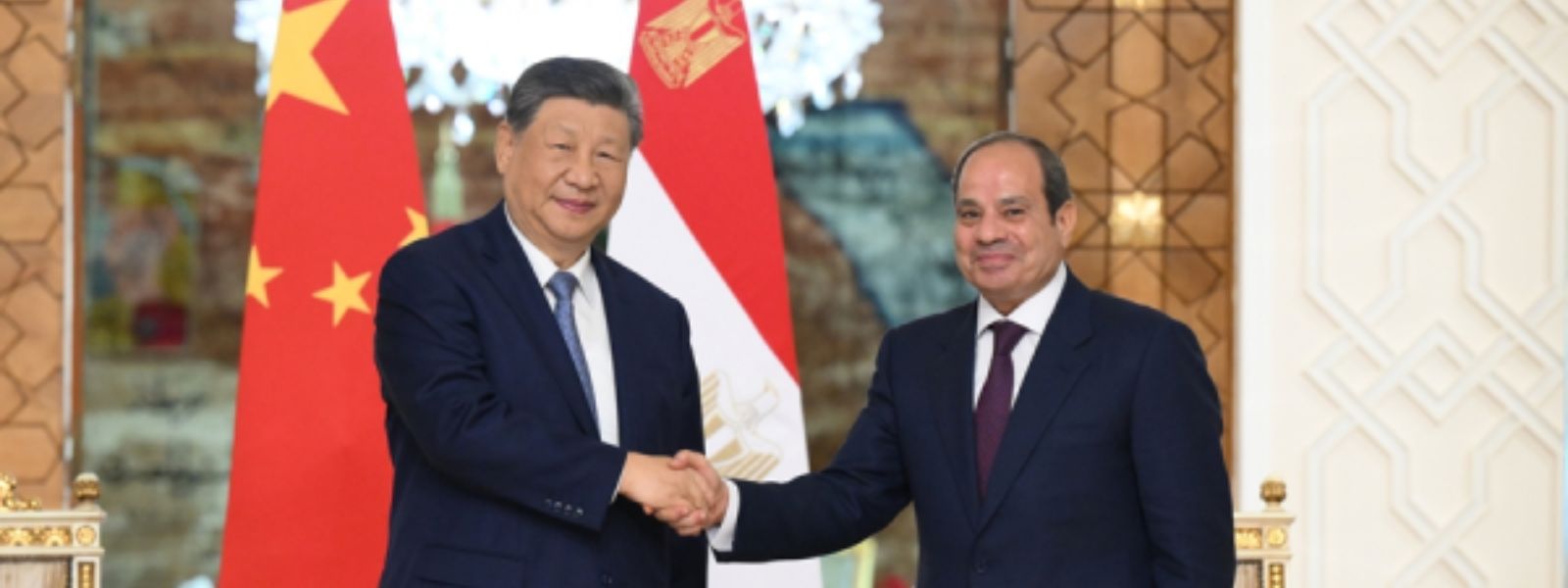
COLOMBO (News 1st): The future security architecture of the Middle East, the role of regional powers in shaping their own destiny and the search for lasting peace in one of the world's most volatile regions dominated talks between Chinese President Xi Jinping and Egyptian President Abdel Fattah El-Sisi on September 2.
The high-level discussions took place at Cairo's historic Al-Ittihadiya Palace, one of Egypt's most prominent centers of state leadership and diplomacy, where the two leaders held extensive talks on regional stability, development and security cooperation.
President Xi outlined China's vision for a new Middle East security architecture built on cooperation, mutual trust and regional ownership. According to Xi, countries of the region should strengthen good-neighborly relations and embrace a model of common, comprehensive, cooperative and sustainable security.
To support that vision, the Chinese leader presented four key proposals.
The first focused on empowering countries in the region to take responsibility for their own future. Xi stressed that the people of the Middle East should be the masters of their own affairs and that external interference should be opposed. He called for stronger dialogue among regional nations on peace and security issues and urged countries to play a leading role in reshaping the region's security framework.
His second proposal centered on addressing the Middle East's interconnected crises through comprehensive solutions. Xi emphasized that the Palestinian issue remains at the core of the broader Middle East question and should never be neglected or marginalized.
The third proposal highlighted development as the foundation of long-term security and stability. The Chinese President said lasting peace in the Middle East depends fundamentally on economic growth and cooperation. He noted that China is prepared to work with regional countries to safeguard international shipping routes, expand development cooperation, strengthen economic ties and build greater trust among countries while addressing conditions that often fuel conflict.
His fourth proposal called for stronger international coordination based on the principles of the United Nations Charter and international law. Xi urged the international community, particularly major powers outside the region, to reject double standards, respect the sovereignty and territorial integrity of Middle Eastern nations and support a more active role for the United Nations in regional affairs.
President Abdel Fattah El-Sisi welcomed China's approach to Middle East issues and praised Beijing for maintaining what he described as an objective and balanced position on regional matters.
The Egyptian leader reiterated Egypt's commitment to reducing tensions, resolving disputes through political means and promoting both security and development across the region.
El-Sisi also expressed Egypt's readiness to strengthen coordination with China in efforts to ease tensions, safeguard regional stability and explore a future security framework capable of supporting long-term peace in the Middle East.
Other Articles








Featured News



News 1st, MTV Channel (Pvt) Ltd, MBC Networks (Pvt) Ltd, 45/3, Braybrooke Street, Colombo-02.
T.P : +94 114 792 700,
Fax : +94 114 792 733
T.P : +94 114 792 700,
Fax : +94 114 792 733




 |  |  |
|---|---|---|
 |  |  |
 |  |  |
 |

.gif)