.webp)


Sri Lanka To Scrap Decades-Old PTA In A Few Months



.png )
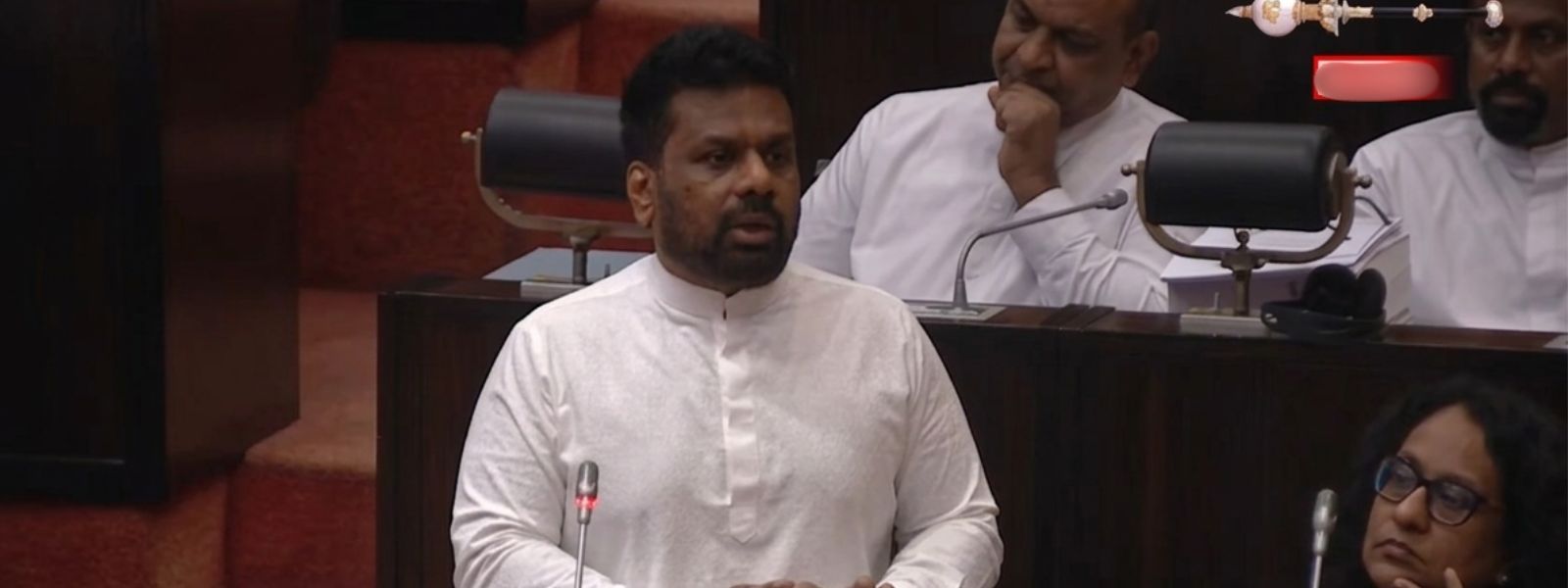
COLOMBO (News 1st); President Anura Kumara Dissanayake has announced that Sri Lanka will soon abolish the long-standing Prevention of Terrorism Act (PTA), marking a significant policy shift aimed at strengthening democratic freedoms while introducing new legal measures to combat organized crime.
Speaking on the matter, the President noted that the PTA, originally introduced in 1979 as a temporary law for a period of one year, has remained in force for over four decades. He acknowledged that for many years, there has been sustained public opposition to the law from citizens who value democracy, fundamental human rights, and personal freedoms, with widespread concerns raised over its broad provisions.
The President stated that the government is now in the final stages of repealing the PTA, with the draft process already completed and discussions concluded at the highest levels.
He expressed confidence that the legislation will be abolished within the next few months.
However, he emphasized that while the PTA will be removed, the government recognizes the ongoing threat posed by organized crime. In response, a new, robust legal framework is being developed specifically targeting organized criminal networks.
He explained that unlike the PTA, which has been criticized for its wide scope and broad definitions that could be used to penalize individuals beyond its intended purpose, the new law will include clearly defined provisions focused strictly on organized crime.
The President stressed that under the PTA, the interpretation of terrorism has historically been so expansive that it could be used to take legal action against individuals in a manner that raised serious concerns about misuse. He said the new legal framework will correct these issues by ensuring precise definitions and safeguards to prevent abuse while still equipping authorities with the necessary powers to address serious criminal activities.
He further assured that the new legislation will be designed in a way that fully protects fundamental rights, including freedom of expression and democratic rights, while maintaining national security.
The law will be narrowly tailored to ensure it targets only organized criminal activity without extending into areas that could infringe on civil liberties.
In addition, President Dissanayake addressed concerns over other controversial legislation, including the Online Safety framework introduced by the previous government. He noted that although it had been passed in Parliament, it was not implemented under his administration. Instead, the government has taken steps to introduce comprehensive amendments, with Cabinet approval already granted to move forward with a revised version of the law.
He pointed out that in the past, there had been instances where legislation passed in Parliament was subsequently amended at the Cabinet level, raising questions about transparency and due process. The current administration, he said, is committed to ensuring that all legal reforms are carried out in a transparent manner that prioritizes the rights of the public.
Other Articles









Featured News



News 1st, MTV Channel (Pvt) Ltd, MBC Networks (Pvt) Ltd, 45/3, Braybrooke Street, Colombo-02.
T.P : +94 114 792 700,
Fax : +94 114 792 733
T.P : +94 114 792 700,
Fax : +94 114 792 733




 |  |  |
|---|---|---|
 |  |  |
 |  |  |
 |

.gif)