.webp)


UN, Partners End Emergency Response to Cyclone Ditwah



.png )
COLOMBO (News 1st); Mission concluded, but Sri Lanka’s long road to recovery continues as the United Nations and its humanitarian partners officially wrap up the Humanitarian Priorities Plan (HPP), a critical emergency response effort launched in the aftermath of Cyclone Ditwah, one of the most devastating disasters in the country’s recent history.
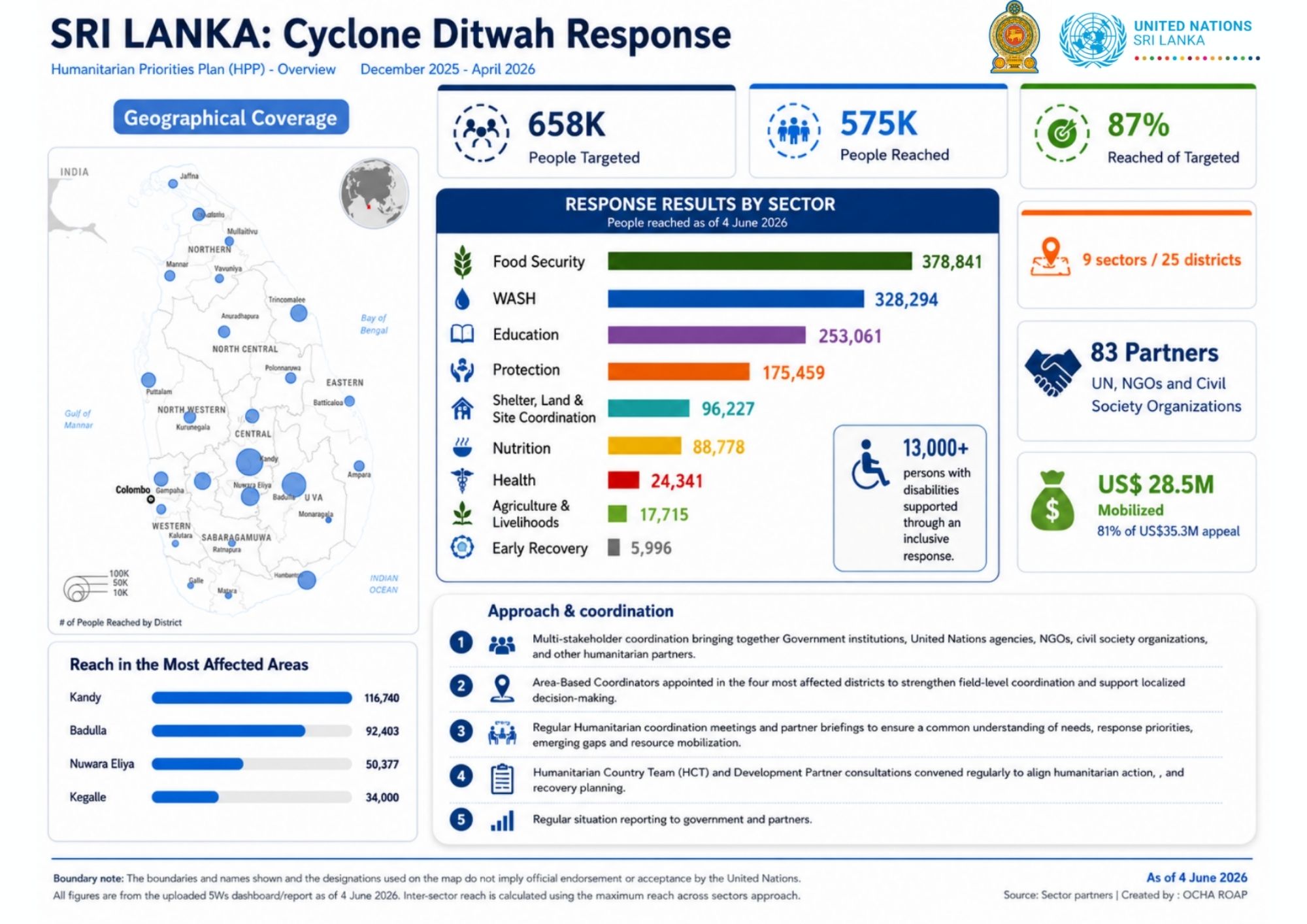
Cyclone Ditwah struck Sri Lanka in December 2025, unleashing widespread destruction through severe flooding and landslides across all 25 districts.
At the height of the disaster, more than 2.2 million people were affected, including an estimated 522,000 children. The human toll was devastating, with over 640 lives lost and 173 individuals still reported missing as of January 2026, leaving communities shattered and families displaced overnight.
In response to a request from the Government of Sri Lanka, the United Nations, together with a broad coalition of humanitarian partners, launched the HPP on December 11, 2025, as a coordinated effort to deliver urgent life-saving assistance.
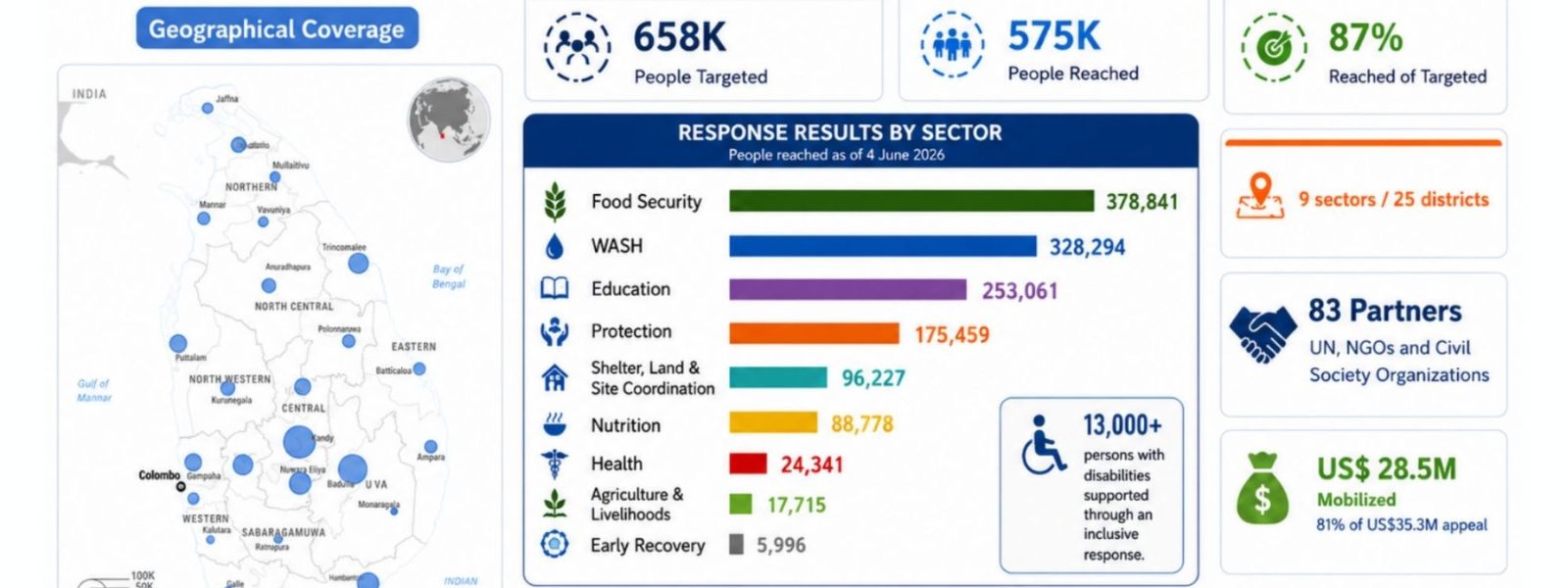
That mission has now come to a close, having reached approximately 575,000 of the most vulnerable people across the country, particularly in the hardest-hit districts of Badulla, Nuwara Eliya, Kandy, and Kegalle.
The scale of international solidarity was significant. Against a funding requirement of US$ 35.3 million, the operation secured US$ 28.5 million in contributions from a wide network of global partners, including Australia, the United States, Japan, the European Union, the United Kingdom, Canada, Norway, and others, alongside major international funds and UN agencies.
Additional support extended beyond financial aid, with more than 20 countries providing bilateral assistance and 19 nations deploying search and rescue teams or offering technical and material support.
On the ground, the impact of the response translated into real relief for families who had lost everything. Emergency cash assistance helped thousands cover basic needs such as food and clothing, while displaced households received transitional shelters equipped with access to clean water and sanitation.
For many, this support meant the difference between survival and despair in the immediate aftermath of the disaster. One mother from Kandy, whose home was destroyed, described how the assistance helped her provide essentials for her children after losing everything overnight.
The HPP was strategically designed to complement Sri Lanka’s national response, working in close coordination with government institutions including the Ministry of Foreign Affairs, the Disaster Management Centre, and the National Disaster Relief Services Centre.
A total of 83 partner organizations contributed to the effort, ensuring that aid was delivered quickly and targeted toward those most in need. Officials have emphasized that the success of the response lay in strong national leadership combined with effective partnerships.
Other Articles








Featured News


-835300_550x300.jpg)

News 1st, MTV Channel (Pvt) Ltd, MBC Networks (Pvt) Ltd, 45/3, Braybrooke Street, Colombo-02.
T.P : +94 114 792 700,
Fax : +94 114 792 733
T.P : +94 114 792 700,
Fax : +94 114 792 733




 |  |  |
|---|---|---|
 |  |  |
 |  |  |
 |

.gif)