.webp)


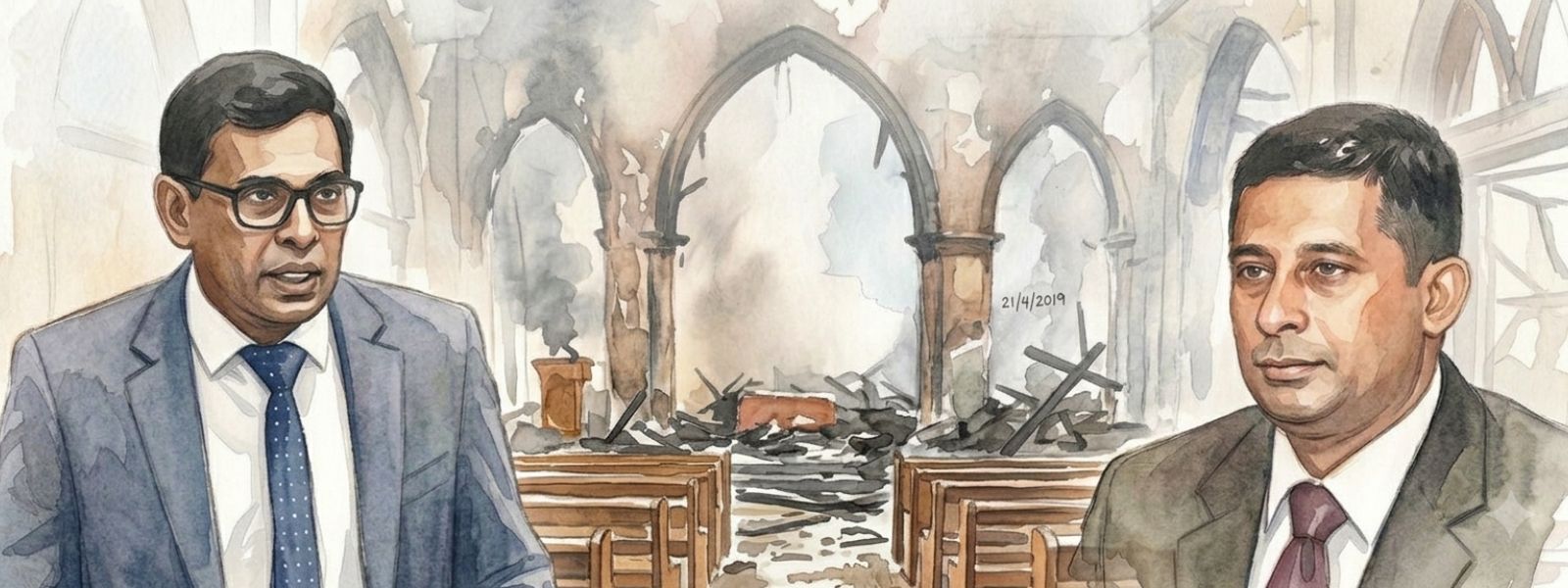
'Credible Evidence' Links Former Spy Chief Suresh Salley of Orchestrating Easter Attacks



.png )
COLOMBO (News 1st); Sri Lanka’s Minister of Public Security Ananda Wijepala has made a sweeping and deeply consequential disclosure, stating that investigations into the April 21, 2019 Easter Sunday suicide bombings have uncovered sufficient and credible evidence to reasonably believe that a former senior military intelligence official, retired Major General Tuan Suresh Salley, conspired in facilitating the attacks by strategically directing Islamic extremists toward carrying them out.
According to the Minister, the suspect, who previously served as Director of Military Intelligence and later as Director of the State Intelligence Service, is alleged to have played a central role in creating the conditions that ultimately led to the coordinated terror strikes that devastated the country, killing large numbers of civilians, causing serious injuries, massive property destruction, severe economic repercussions, and damaging inter-religious and inter-ethnic harmony.
Wijepala revealed that critical evidence points to a covert operation that took place approximately three weeks prior to the attacks.
During that period, four Muslim individuals had allegedly been deployed under the direction of the suspect to gather sensitive intelligence from Catholic churches in the Negombo area. This intelligence included data such as the number of worshippers attending religious services and other highly sensitive details that are believed to have been vital for planning the scale and targets of the bombings.
Significantly, a witness has reportedly identified the photograph of the main individual among those four operatives from a set of images maintained by the Criminal Investigation Department (CID) of suspects linked to Islamic extremism. Investigations have further revealed that this individual was an ISIS ideologue and has remained missing since the Easter Sunday attacks.
The Minister also disclosed that prior warnings had been received regarding a potential attack being planned by Islamic extremists belonging to the National Thowheed Jama’ath (NTJ), including its leader Zahran Hashim. These warnings were reportedly conveyed by an intelligence informant residing in Panadura, who had alerted the military intelligence authorities of an imminent threat.
However, Wijepala stated that this intelligence was ignored within the military intelligence apparatus, thereby enabling the attacks to proceed.
More alarmingly, the informant who provided this critical warning was allegedly arrested unlawfully and detained after sharing the intelligence. He was subsequently released, but following his release, he was reportedly summoned by Major General Salley to a meeting at the Galadari Hotel in Colombo. During that meeting, the two discussed the matter in detail, and the suspect is said to have apologized to the informant.
Further corroboration has emerged from statements made by Mohamed Milar Mohamed Hanseer also known as Azad Maulana, which were publicly aired in a program on the British television network Channel 4. According to the Minister, the disclosures made during that program support the findings that a deliberate and structured background had been orchestrated to facilitate the Easter Sunday attacks.
Wijepala stressed that the April 21, 2019 attacks were not only acts of extreme violence but also events that inflicted lasting damage on Sri Lanka’s national security, economy, and social fabric. He stated that the attacks resulted in the killing of a large number of individuals, left many severely injured, caused immense property destruction, and created deep divisions among communities of different religions and ethnicities.
Based on the findings, authorities now suspect that the retired Major General, as a senior intelligence figure, had prior knowledge of the plot and may have actively participated in a conspiracy that included both enabling the attacks and preventing the disclosure of critical information before and after the incident.
The Minister asserted that such actions fall within offences under the Prevention of Terrorism Act No. 48 of 1979, including providing direct and indirect support to terrorist activities and assisting in concealing the individuals, groups, or networks responsible.
He further stated that investigations indicate deliberate efforts were made to prevent the exposure of key facts related to the attacks, which became one of the most controversial and sensitive incidents in Sri Lanka’s history.
Wijepala also provided a detailed account of the procedures followed after the suspect’s arrest, emphasizing that all legal and human rights safeguards had been adhered to.
Upon arrest, the suspect was provided with all fundamental rights and facilities afforded to a detainee. He was granted the opportunity to consult and communicate with his legal counsel and obtain legal advice. Investigators escorted him to his residence, where he was shown to his wife and other family members, and the reasons for his arrest were explained. An official receipt documenting the arrest was handed over to his wife.
The Criminal Investigation Department formally notified the Human Rights Commission of Sri Lanka in writing regarding the arrest and detention of the suspect. Following the arrest, the suspect was also presented before the Colombo Judicial Medical Officer.
Detention orders were obtained under the Prevention of Terrorism Act, initially for 72 hours, and subsequently extended in accordance with legal provisions under Section 9 of the Act, allowing for detention and interrogation for a period of up to 90 days.
The Magistrate’s Court of Colombo Fort was informed under case number B 35882/2024, and the suspect was named as the third accused in the case. He has since been produced in court during relevant proceedings while in detention.
Authorities also informed the Human Rights Commission in writing that the suspect was being detained under a detention order at the CID, and his close relatives were similarly notified.
The Minister detailed that the suspect has been provided regular access to his rights and privileges during detention, including the ability to meet his lawyer every Wednesday to receive legal advice, communicate with his wife, mother, and close relatives via telephone every Friday, and receive in-person visits from relatives every Saturday. During these visits, family members are permitted to bring food, clothing, beverages, and other personal necessities such as oil.
In accordance with the amended provisions of the Prevention of Terrorism Act under Act No. 12 of 2022, particularly Section 9, the Colombo Fort Magistrate has personally visited the CID detention facility on several occasions to observe the condition of the suspect in custody.
During these inspections, the suspect has not made any complaints regarding inhumane treatment or torture. The Minister emphasized that despite various public claims, the suspect has not raised any allegations of mistreatment either before the Magistrate or any other authority, nor has any complaint been lodged against investigating officers.
Wijepala noted that investigations are ongoing as authorities continue to pursue all leads in uncovering the full extent of the alleged conspiracy behind the Easter Sunday attacks, one of the deadliest and most traumatic events in Sri Lanka’s modern history.
Other Articles




-842611_550x300.jpg)




Featured News

-835300_550x300.jpg)

News 1st, MTV Channel (Pvt) Ltd, MBC Networks (Pvt) Ltd, 45/3, Braybrooke Street, Colombo-02.
T.P : +94 114 792 700,
Fax : +94 114 792 733
T.P : +94 114 792 700,
Fax : +94 114 792 733




 |  |  |
|---|---|---|
 |  |  |
 |  |  |
 |

.gif)