.webp)


Can Sri Lanka Become a High-Income Nation? IMF Urges Deep Reforms for Sri Lanka’s Future



.png )
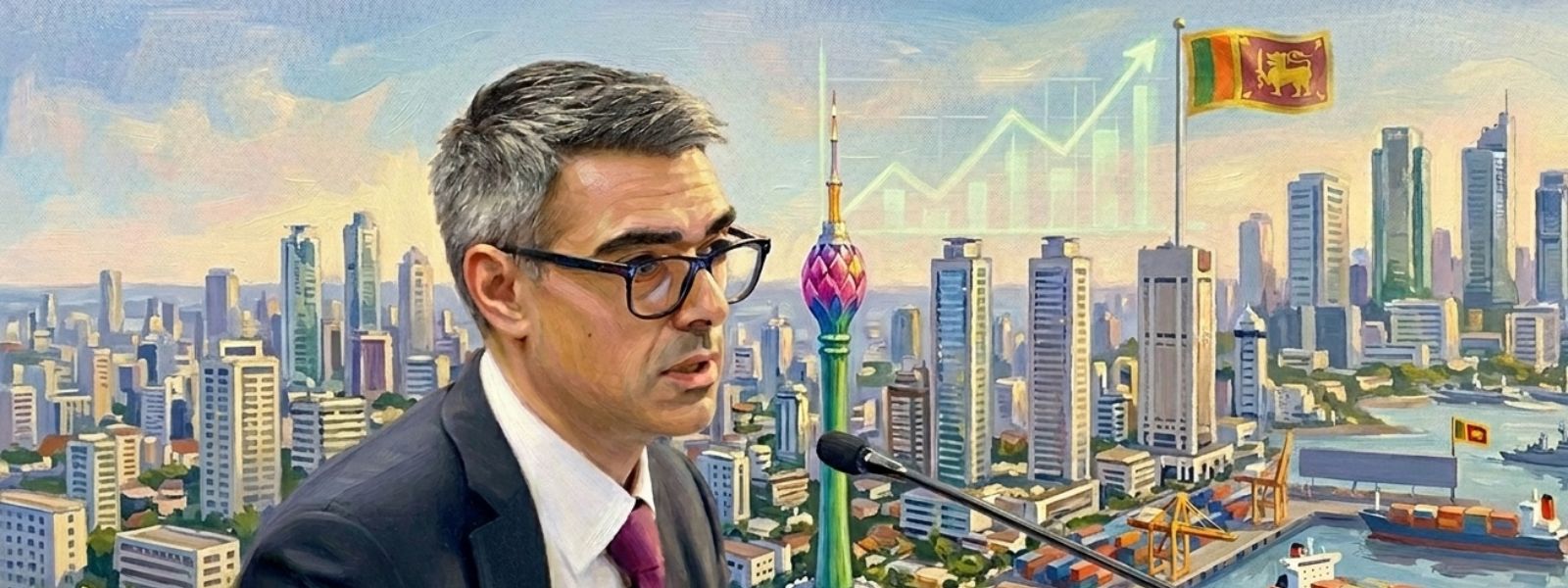
COLOMBO (News 1st); Sri Lanka must undertake deep and sustained structural reforms to break free from its long-standing middle-income trap and transition into an upper-middle-income economy, according to the International Monetary Fund’s Mission Chief for Sri Lanka, Evan Papageorgiou.
Speaking in response to a question raised by News 1st journalist Zulfick Farzan on the country’s long-term economic trajectory, Papageorgiou emphasized that the challenge extends far beyond short-term recovery and requires a fundamental transformation of the country’s economic structure.
He noted that boosting Sri Lanka’s growth potential will depend heavily on improving productivity and driving higher levels of investment across key sectors of the economy.
Papageorgiou highlighted that reforming the business environment stands as a top priority, stressing the importance of simplifying regulations, strengthening property rights, and fostering greater market competition to attract both local and foreign investors.
“Lifting the country’s growth potential and moving toward upper-middle-income status requires deep structural reforms that address productivity and investment,” he said.
A key factor identified by the IMF is the need to expand foreign direct investment (FDI), which Papageorgiou stated remains relatively low in Sri Lanka. He warned that limited FDI inflows continue to hinder technology transfer, innovation, and job creation, all critical components of sustainable economic growth.
Another major reform area outlined is economic diversification. Currently, Sri Lanka’s export base is heavily reliant on sectors such as textiles and agriculture. Papageorgiou stressed the necessity of moving toward high-value industries, supported by improved skills development and innovation capacity.
Governance reforms were also pointed out as essential, with Papageorgiou pointing to the need to reduce corruption risks and strengthen institutional frameworks in order to build investor confidence and improve economic stability.
He further highlighted the importance of modernizing key sectors such as electricity, noting that although legislative changes, including the amended Electricity Act, have laid the groundwork, further improvements in efficiency and reliability are required to support long-term growth.
Infrastructure development was identified as another critical pillar, with Papageorgiou emphasizing the role of enhanced public financial management practices in ensuring efficient use of resources and better outcomes for large-scale projects.
Reflecting on Sri Lanka’s progress, Papageorgiou acknowledged that important groundwork has already been laid by authorities, who continue to receive guidance from the IMF and other development partners.
However, he stressed that sustained commitment and strong policy implementation will be vital to achieving the desired economic transformation.
“These reforms collectively will help break historical constraints and set a foundation for higher, more inclusive growth. But there needs to be strong commitment and effort,” he said.
Other Articles
-841500_550x300.jpg)
-841494_550x300.jpg)








Featured News


-835300_550x300.jpg)

News 1st, MTV Channel (Pvt) Ltd, MBC Networks (Pvt) Ltd, 45/3, Braybrooke Street, Colombo-02.
T.P : +94 114 792 700,
Fax : +94 114 792 733
T.P : +94 114 792 700,
Fax : +94 114 792 733




 |  |  |
|---|---|---|
 |  |  |
 |  |  |
 |

.gif)