.webp)


Amnesty Report Alleges Forced Labour Abuses on Sri Lanka Tea Estates



.png )
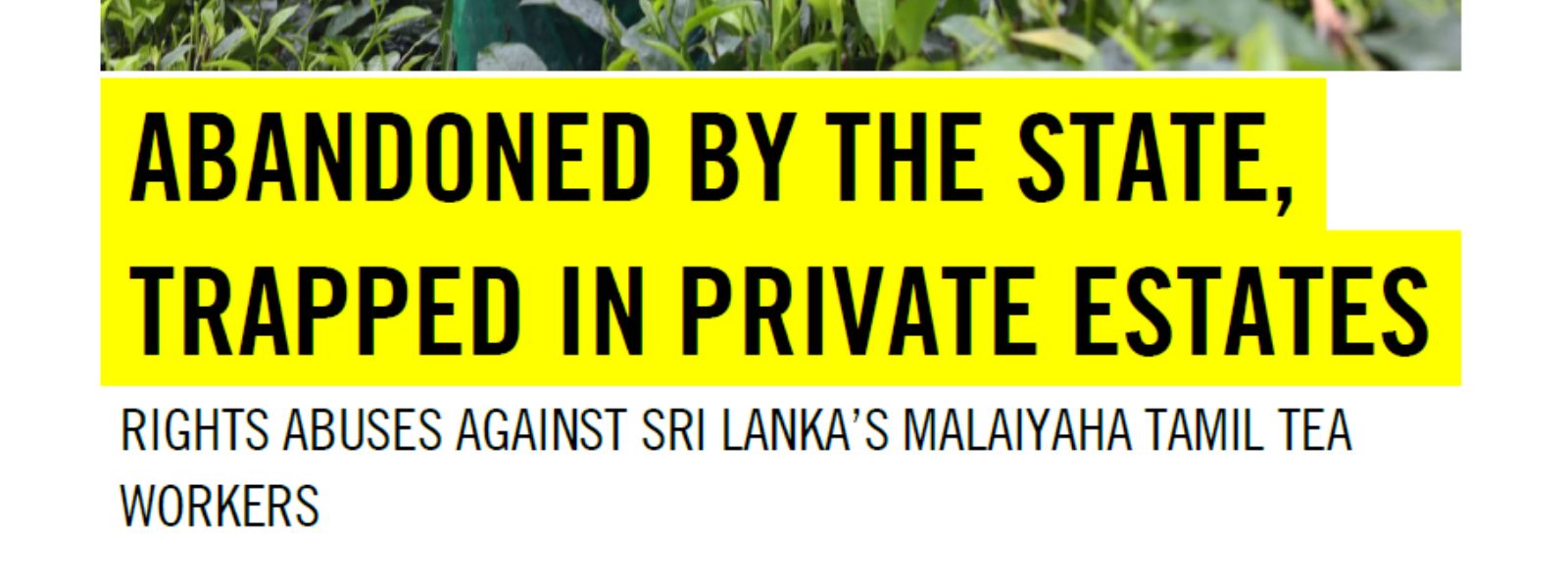
COLOMBO (News 1st); A new report by Amnesty International has raised serious concerns over the treatment of Malaiyaha Tamil workers employed on private tea estates and smallholdings in Sri Lanka, alleging widespread labour abuses that may amount to indicators of forced labour under international standards.
The report, which focuses on estates in the Southern Province, documents a pattern of systemic exploitation faced by members of the historically marginalised Malaiyaha Tamil community. According to the findings, workers are subjected to intimidation, threats, physical violence, harassment, debt bondage, restrictions on movement, and poor living and working conditions.
Amnesty International stated that these practices align with several indicators of forced labour identified by the International Labour Organization (ILO), while also highlighting that affected workers are effectively denied access to Sri Lanka’s existing labour protections.
The organisation further alleged that the state has failed not only to address these abuses but also to ensure workers’ rights to social security, unionisation, and access to justice. As a member of the ILO and a signatory to international human rights treaties such as the International Covenant on Economic, Social and Cultural Rights, Sri Lanka is obligated to protect workers from discrimination and exploitation.
The findings reveal that Malaiyaha Tamil workers, descendants of labourers brought from southern India during British colonial rule, continue to face entrenched discrimination and marginalisation, leaving them highly vulnerable to exploitation.
Their dependence on estate employers for housing, livelihoods, and welfare further limits their ability to challenge abuse.
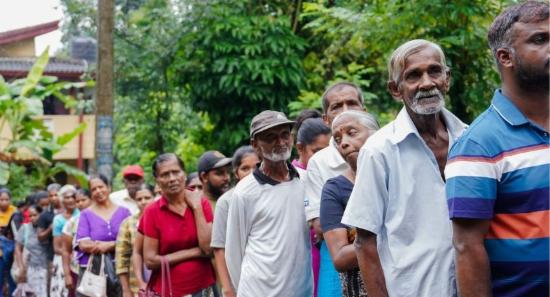
Across all 45 estates examined, workers reported reliance on employer-provided housing, often accompanied by fear of eviction.
On 15 estates, workers recounted incidents of verbal and physical abuse by management, particularly when they were late, questioned unpaid wages, or failed to meet work targets.
Restrictions on movement were also reported on at least 22 estates, with workers subjected to curfews or required to obtain permission to travel. Living conditions frequently fell below acceptable standards, with inadequate space, sanitation, and security of tenure.
The report further points to systemic gaps in labour protection, with many workers being misclassified as “casual workers” by employers. This classification effectively excludes them from basic legal entitlements, including pensions, maternity benefits, and sick leave.
Barriers to justice were found to be severe. Language differences between workers and authorities, discriminatory attitudes, and lack of formal employment documentation were identified as key obstacles preventing workers from seeking redress. In many of the estates surveyed, trade unions were either absent or not permitted to operate.
Amnesty International also highlighted shortcomings in labour inspections and enforcement of employment standards, particularly in the Matara and Galle districts.
“The exploitation of Malaiyaha Tamil workers is being enabled by entrenched discrimination and systemic mischaracterisation of their status,” said Smriti Singh, Amnesty International’s Regional Director for South Asia. “We urge the authorities to fully enforce the law, dismantle the barriers preventing the Malaiyaha Tamil community from accessing their rights, and strengthen labour protections and accountability across private tea estates.”
Other Articles







Featured News

-835300_550x300.jpg)


News 1st, MTV Channel (Pvt) Ltd, MBC Networks (Pvt) Ltd, 45/3, Braybrooke Street, Colombo-02.
T.P : +94 114 792 700,
Fax : +94 114 792 733
T.P : +94 114 792 700,
Fax : +94 114 792 733




 |  |  |
|---|---|---|
 |  |  |
 |  |  |
 |

.gif)