.webp)


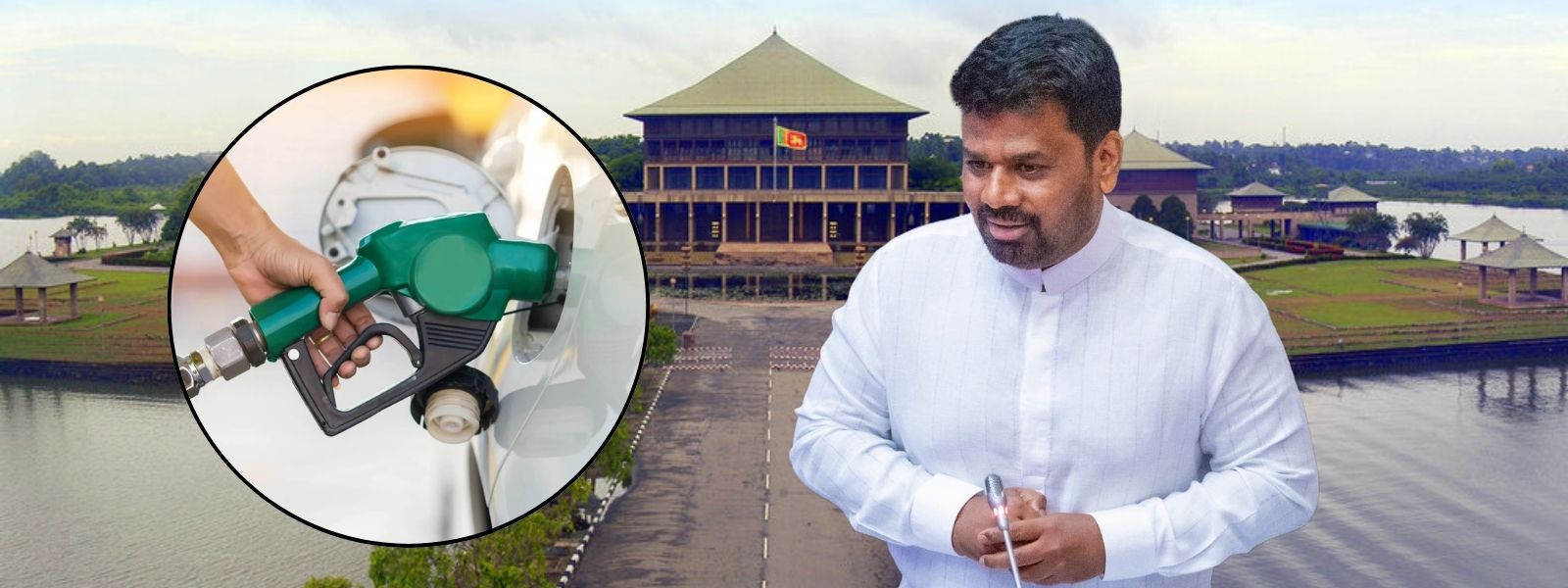
President Announces Three-Month Fuel Subsidy Plan to Ease Cost Pressures



.png )
COLOMBO (News 1st); Sri Lanka President Anura Kumara Dissanayake has outlined the government’s approach to addressing rising costs in the energy sector, identifying fuel, electricity, gas, and the broader power sector as key pressure points affecting the public and the economy.
Speaking on the issue, the President said the government considered two main options in managing fuel prices.
One option was to allow fuel prices to fully adjust according to cost and sell fuel strictly at market rates. He said this approach would ease pressure on the Treasury, the Ceylon Petroleum Corporation, and the Ceylon Electricity Board, which have previously suffered heavy losses. However, he noted that such a move would have a direct impact on the economy, industrialists, businesses, and ordinary daily life.
The second option, the President said, was to introduce a subsidy mechanism instead of allowing prices to fully adjust to cost. He explained that the government sought a balanced approach between these two paths.
According to the President, if fuel prices were fully aligned with costs based on current calculations, the price of a litre of diesel would exceed Rs. 600. He noted that this figure includes an excise duty of Rs. 50 per litre.
While there have been suggestions to completely remove this excise duty, the President said that doing so would only reduce the price by Rs. 50.
Instead, the government has decided to maintain the existing tax structure and allocate funds from the Treasury to provide a subsidy on every litre of fuel sold.
Under this plan, the government will provide up to Rs. 100 per litre for diesel and up to Rs. 20 per litre for petrol as a subsidy.
The President said fuel prices will continue to be adjusted based on cost, with the first such adjustment scheduled for May 1. Fuel price calculations will be based on actual data from the previous month, allowing the government to determine the correct subsidy amount at each adjustment.
He said the subsidy programme is expected to cost approximately Rs. 20 billion per month, and the government has planned the scheme for a period of three months, allocating Rs. 60 billion in total.
Emphasising policy direction, the President said subsidies should ideally be provided to targeted groups. However, due to the absence of a reliable data system to accurately identify individual fuel consumers, the government decided to apply a general subsidy of Rs. 100 per litre on diesel.
He added that super diesel and super petrol will be sold fully at market prices. The government expects that users of these fuel types are consumers who do not anticipate subsidies.
In addition to the general fuel subsidy, the President announced targeted support for the fishing community, recognising that fuel is a primary economic input for them.
He said fishermen using small boats will receive an additional Rs. 50 per litre subsidy, regardless of whether they use petrol, diesel, or kerosene.
Under this measure, a small fishing boat will be eligible for 25 litres per day for 25 days a month, amounting to 625 litres per month. The additional subsidy will be credited directly to fishermen’s bank accounts, resulting in a monthly benefit of Rs. 31,250 per boat. This programme will also be implemented for three months.
For multi-day fishing vessels, the President said such boats typically operate once every three months. Accordingly, the government plans to provide a Rs. 150,000 fuel allowance per vessel, payable once during the three-month subsidy period.
The President said the fishing community-focused programme will operate in addition to the broader fuel subsidy and is intended as a targeted relief measure.
Other Articles






Featured News


News 1st, MTV Channel (Pvt) Ltd, MBC Networks (Pvt) Ltd, 45/3, Braybrooke Street, Colombo-02.
T.P : +94 114 792 700,
Fax : +94 114 792 733
T.P : +94 114 792 700,
Fax : +94 114 792 733




 |  |  |
|---|---|---|
 |  |  |
 |  |  |
 |

.gif)