.webp)


Ex-US Counterterrorism Director Disputes Claims Iran Was Nearing a Nuke



.png )
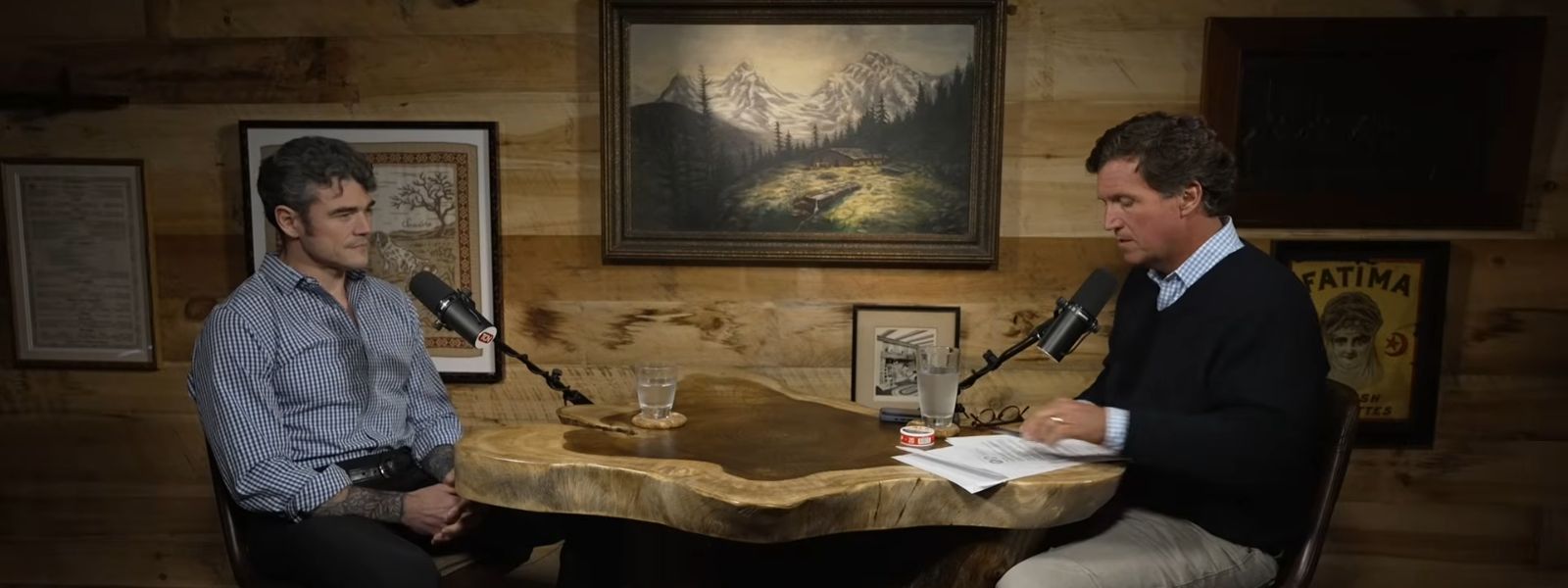
COLOMBO (News 1st); No intelligence indicated that Iran posed an imminent nuclear threat, former Director of the United States National Counterterrorism Center Joe Kent said during an exchange with American commentator Tucker Carlson, challenging repeated public claims that Iran was on the verge of acquiring a nuclear weapon.
Carlson went on to say that while there appeared to be broad agreement on the principle that Iran should not have a nuclear weapon, the key question remained whether Iran was actually close to developing one.
“Was Iran on the verge of getting a nuclear weapon?” Carlson asked.
“No, they weren’t,” Kent said, adding that this was the case both three weeks prior to the discussion and earlier in June. He said Iran has had a religious ruling, or fatwa, prohibiting the development of nuclear weapons since 2004, and that the ruling has remained in place and publicly available.
Kent said there was no intelligence indicating that the fatwa was being violated or that it was close to being lifted. He described Iran’s approach as pragmatic, shaped by events in the region and the lessons drawn from them.
According to Kent, Iran observed what happened to Libya’s former leader Muammar Gaddafi after he abandoned his nuclear ambitions.
Carlson added that the manner of Gaddafi’s death was widely discussed and argued that it sent a powerful message across the region during the period of US-led intervention.
Kent agreed, saying that this was the lesson delivered by what he described as “neocon neoliberal war-mongers,” and that it shaped how regional actors assessed their own security.
Kent said Iran also took note of what happened in neighbouring Iraq, where Saddam Hussein was overthrown and later executed following a prolonged and violent conflict. From Iran’s perspective, he said, the strategy was to avoid fully abandoning its nuclear programme while also not crossing the threshold into weaponisation.
“They were preventing themselves from developing a bomb, but they still wanted the ability to enrich,” Kent said, adding that Iran sought to retain components of a civilian nuclear programme so it would not be completely stripped of capability.
US assessments, he said, consistently concluded that Iran was several months to one or two years away from developing a nuclear weapon. This, Kent stressed, was not due to a lack of scientific capability.
“The Iranians are anything but stupid,” he said, noting that Iran had the technical expertise to develop a weapon and could also have acquired one through external means, such as trading oil with other nuclear-armed states.
“They were not doing that,” Kent said. “We had no indication that they were.”
Other Articles








Featured News




News 1st, MTV Channel (Pvt) Ltd, MBC Networks (Pvt) Ltd, 45/3, Braybrooke Street, Colombo-02.
T.P : +94 114 792 700,
Fax : +94 114 792 733
T.P : +94 114 792 700,
Fax : +94 114 792 733




 |  |  |
|---|---|---|
 |  |  |
 |  |  |
 |

.gif)