.webp)


CID Reveals Explosive New Claims Linking Ex‑Intelligence Chief Suresh Salley to Easter Attacks



.png )
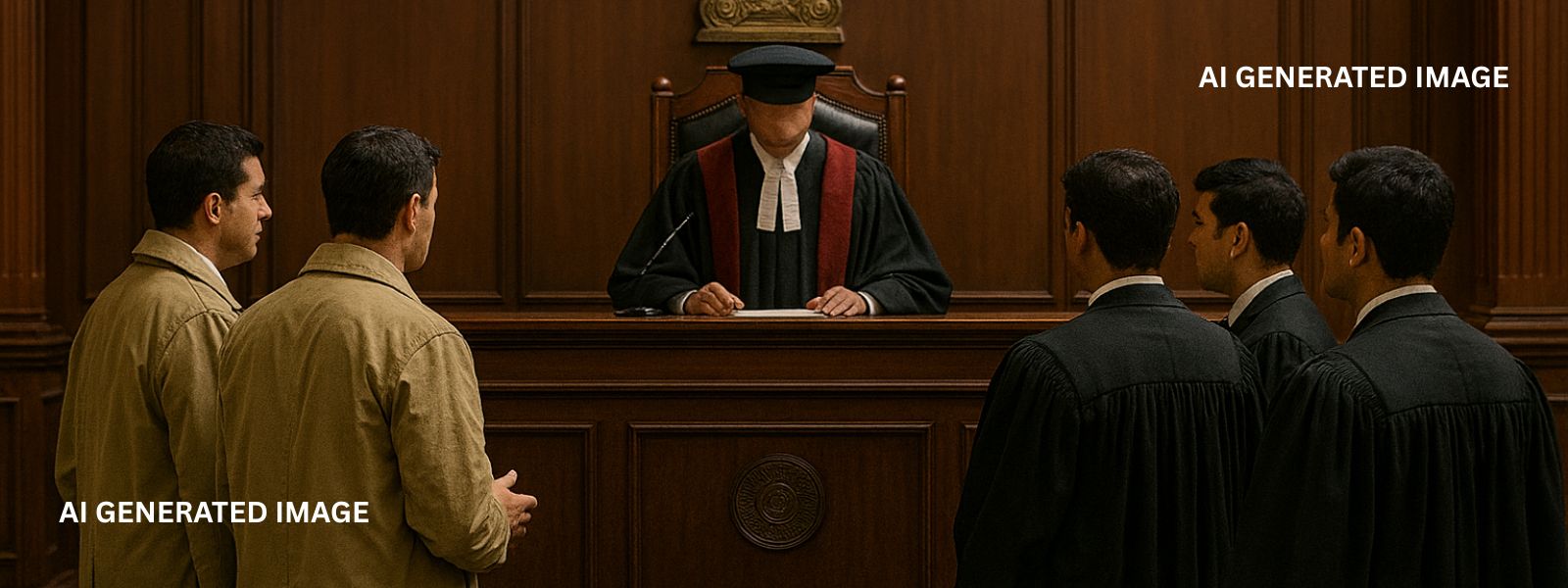
COLOMBO (News 1st); Former Director of the State Intelligence Service, Retired Major General Suresh Salley, who is currently detained under the Prevention of Terrorism Act, is facing allegations that are directly connected to the Easter Sunday attacks, Colombo Fort Magistrate Isuru Neththikumara stated today.
The Magistrate noted that these matters do not relate to dereliction of duty or any other unrelated issues, but concern direct links to the Easter Sunday bombings.
The Criminal Investigation Department (CID) submitted its progress report on the ongoing investigation into the Easter attacks before the Colombo Fort Magistrate’s Court today.
The Criminal Investigation Department (CID) today reported to court several findings revealing alleged links between former State Intelligence Chief Suresh Salley and the Easter Sunday terror attacks.
According to the CID, investigations have uncovered that Salley was directly involved in gathering information for Saharan’s group ahead of the attack on the Katuwapitiya church, using one of his informants for this purpose.
Investigation Officer’s statement (excerpt):
“This intelligence unit also maintained another informant in the Panadura area. He had provided advance warning that the attack would take place. On the day of the attack, when questioned, he told officers that an Army officer with at least 20 years of experience was behind the attack. Senior Army officers questioned him extensively over the phone, and on 26 April 2019, this informant was taken into custody by Military Intelligence and later handed over to the Terrorism Investigation Division (TID). Afterward, his household needs were handled by Military Intelligence, and arrangements were made to provide a job for his son in the Army Intelligence IT division.” End of excerpt.
The Fort Magistrate noted that while intelligence officers are legally permitted to maintain informants, the concern arises from allegations that such support continued even after the informant became a suspect.
When questioned, CID officers confirmed that the suspect continued to be maintained thereafter, explaining how Suresh Salley was allegedly connected to this process.
Investigation officer’s statement (excerpt):
“All of this took place under the guidance of the suspect. After this suspect was released on the advice of the Attorney General, he was handed to TID officers, taken to the Galadari Hotel, thanked, and told to step away from this work.” End of excerpt.
The Magistrate then asked why he was thanked.
Investigation officer’s statement (excerpt): “He was assigned to the TID for questioning. An intelligence officer was sent to obtain details from him on how the investigations were being conducted, how CID should proceed, how TID was working, and how foreign arrivals were doing the questioning.” End of excerpt.
Meanwhile, the CID also revealed that Salley had allegedly interfered in the process of confirming the death of Pulastini Rajendran, also known as Sarah Jasmine, who was linked to the Easter attacks.
Investigation officer’s statement (excerpt):
“Following the 26 April 2019 Sainthamaruthu explosion, a woman named Sarah Jasmine was believed to have died, but her body was never recovered. A DNA report confirming her death was found only on the third attempt. Investigators faced various pressures from the suspect during this third test.” End of excerpt.
The CID further told the court that former IGP C.D. Wickramaratne and former CID Director Nishantha Soysa have already provided testimony on these alleged interferences, stating that Salley repeatedly influenced officials through the National Security Council.
The Magistrate questioned how an intelligence officer could summon a police chief to the Security Council. CID officers responded that only the President could convene such meetings, with sessions conducted based on presentations made by the Director of State Intelligence.
Investigation officer’s statement (excerpt): “Former CID officer Prasad Ranasinghe has stated that after failing to carry out continued instructions under pressure from Suresh Salley, he was brought before the National Security Council and pressured through the President. He later suffered a heart attack due to this stress.” End of excerpt.
Representing Suresh Salley, President’s Counsel Anuja Premaratne addressed the court.
President’s Counsel Anuja Premaratne – Statement (excerpt): “This bombing took place in 2019. Bringing up Katuwapitiya again adds nothing useful. In 2019, this third suspect was not even in Sri Lanka, he was in Malaysia. The claim that the suspect exerted pressure refers to DIGs in the Police and even the IGP. Were these officers operating with or without coats at the time? It is shameful, this narrative being presented. They say they were summoned before the Security Council and reprimanded. SIS functions under the IGP. And besides, how can an Army intelligence officer speak before the Security Council? The Council is convened only by the President. During the 2019 Easter attacks, no Security Council was convened. All of this was revealed before the panel of seven Supreme Court judges.” End of excerpt.
The Magistrate then questioned CID officers regarding the type of pressure allegedly exerted by the President at that time.
Investigation Officer’s statement (excerpt):
“The pressure involved instructing us to exhume bodies in Ampara for a third time and obtain DNA samples. The suspect repeatedly raised this during intelligence review meetings. When it was not carried out, the matter was taken to the Security Council, where the President was told that CID officers were deliberately avoiding this test.” End of excerpt.
Meanwhile, President’s Counsel Anuja Premaratne informed the court that lawyers had encountered various obstacles when attempting to meet Suresh Salley, who is detained under the Prevention of Terrorism Act (PTA).
After considering all submissions, the Fort Magistrate ordered the case to be recalled on the 25th.
Fort Magistrate's Statement (excerpt):
“The matters presented in relation to the third suspect point to issues directly connected to the Easter attacks, not residual matters such as dereliction of duty. Therefore, it appears that the earlier order has been carried out to some extent. Whether the evidence is sufficient must be determined based on today’s consolidated evidence report and future investigations. The court observes that the order has been implemented. These evidentiary matters will be considered at the appropriate stage. Out of the three matters raised regarding the third suspect, one relates to the Security Council. It must be examined whether such an order, if given by the President, falls within powers constitutionally vested in the President through the Security Council. If it does, it cannot be treated as a criminal act. Criminal liability arises only where there is an intention to obstruct investigations. Merely issuing advice regarding investigative steps does not in itself impose criminal liability. Further inquiry is required. It must be determined whether actions occurring at the Security Council amount to an offence and, if so, who bears responsibility. These findings are to be reported to court. If any application is to be made regarding the third suspect, it must be submitted in writing based on previous appellate orders. These will then be considered. Additionally, when reviewing matters under the Prevention of Terrorism Act, the court will issue necessary orders within constitutional limits. This has been personally reviewed. Should anything further be required, it must be submitted in writing.” End of excerpt.
Other Articles
-830492_550x300.jpg)

-830479_550x300.jpg)

-830452_550x300.jpg)
-830446_550x300.jpg)




Featured News



News 1st, MTV Channel (Pvt) Ltd, MBC Networks (Pvt) Ltd, 45/3, Braybrooke Street, Colombo-02.
T.P : +94 114 792 700,
Fax : +94 114 792 733
T.P : +94 114 792 700,
Fax : +94 114 792 733




 |  |  |
|---|---|---|
 |  |  |
 |  |  |
 |

.gif)