.webp)


-828795.jpg)
Governance & Anti-Corruption Are the Next Big Reforms



.png )
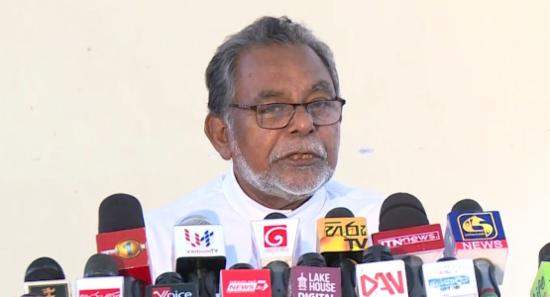
COLOMBO (News 1st); Central Bank Governor Dr. Nandalal Weerasinghe says the most critical landmark reform carried out in recent years is the enactment of the new Central Bank Act, which provides the Central Bank with independence along with strong accountability to the public, Parliament and the markets.
He said this reform has enabled the Central Bank to achieve what is described as monetary stability.
He noted that the amendment to the Banking Act strengthens the Central Bank’s second objective, financial system stability, by improving regulatory and supervisory frameworks to ensure a stronger and more stable financial system, particularly with regard to deposit-taking institutions.
Dr. Weerasinghe identified these two reforms as the most important in achieving overall macro stability.
Referring to other reforms, he highlighted fiscal discipline, fiscal policy and fiscal rules introduced through the Public Finance Management Act, describing it as landmark legislation.
He also pointed to the IMF diagnostic study on corruption and governance, noting that implementing the recommendations of that report is the next major reform priority. He said that after securing macro stability, governance and addressing corruption are essential, and the government has shown strong commitment to implementing this part of the reform agenda.
Dr. Weerasinghe said that after inflation reached nearly 70 percent, Sri Lanka is now experiencing a long period of low and stable inflation, with expectations anchored around the Central Bank’s 5 percent target. He said inflation expectation surveys confirm that expectations remain well anchored, which is critical for medium-and long-term economic performance, investment decisions, pricing and contract planning. Under the new Central Bank Act, he said, maintaining low and stable inflation will continue to be ensured.
He added that stability in the external sector is linked to stable inflation expectations, a more stable exchange rate and the buildup of official external reserves. He said reserves, which stood at USD 6.8 billion last year, are expected to exceed USD 8 billion by the end of this year ,one of the highest levels in recent years, and will continue to be strengthened. He also said exchange-rate volatility will remain low and market-determined.
Dr. Weerasinghe said Sri Lanka must continue on the same stability-focused path, with the government maintaining strong commitment to the fiscal reforms already underway. While growth is currently stable at around 5 percent, he said moving to a higher growth path will require additional structural reforms, with support from institutions such as the World Bank. He said the country’s current potential growth is between 4.5 and 5 percent, and expanding that capacity depends on continuing the full reform agenda.
Other Articles
-828807_550x300.jpg)
-828801_550x300.jpg)







Featured News




News 1st, MTV Channel (Pvt) Ltd, MBC Networks (Pvt) Ltd, 45/3, Braybrooke Street, Colombo-02.
T.P : +94 114 792 700,
Fax : +94 114 792 733
T.P : +94 114 792 700,
Fax : +94 114 792 733




 |  |  |
|---|---|---|
 |  |  |
 |  |  |
 |

.gif)