.webp)


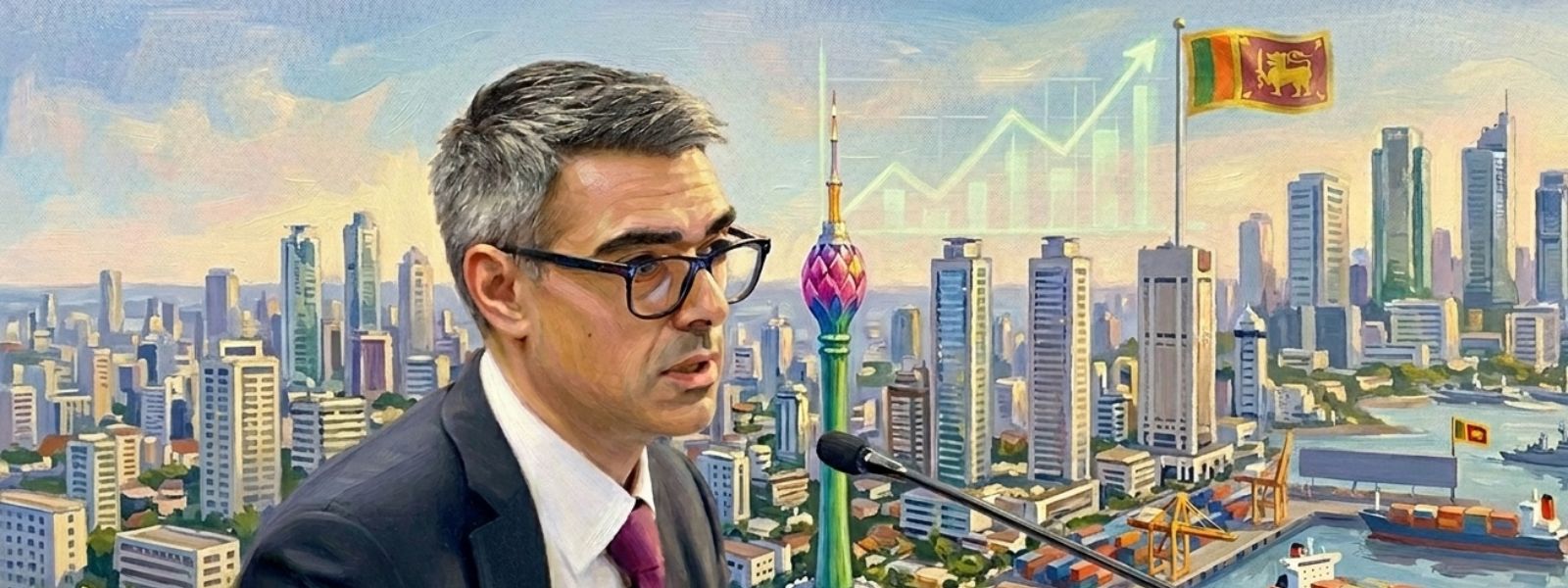
Rupee Is Our First Line of Defence, Not a Victim, Says IMF Mission Chief



.png )
COLOMBO (News 1st); Sri Lanka’s recent gains in stabilising prices and the rupee are the result of cautious monetary policy, not “uncontrolled money printing”, the International Monetary Fund’s (IMF) Mission Chief for Sri Lanka, Evan Papageorgiou, said on Thursday (28).
He noted that inflation, which soared to around 60–70 per cent at the height of the 2022 crisis, has now dropped to low single digits, with a temporary uptick last month due to the Middle East conflict.
Papageorgiou stressed that the Central Bank of Sri Lanka (CBSL) has stopped financing the government’s budget deficit by creating new money under the IMF-supported programme. Policy interest rates are kept in line with the CBSL’s inflation target of 5 per cent, which he described as consistent with maintaining price stability. He said the IMF sees no signs of “destabilising monetary expansion” at present, meaning the central bank is not pumping excessive liquidity into the economy.
On the exchange rate, Papageorgiou said the rupee has been allowed more flexibility and is working as a “shock absorber” for the economy. In simple terms, this means the currency is allowed to move in response to global shocks, rather than being tightly controlled, so that some of the pressure from events like the Middle East conflict is taken by the exchange rate instead of hitting reserves or causing sudden policy shifts. He underlined the need for a “prudent, rules-based” approach to both monetary policy and the exchange rate.
Sri Lanka has also been rebuilding its foreign reserves, according to Papageorgiou. Reserve accumulation is continuing, although the pace has slowed recently because the central bank has had to step in to smooth out excessive volatility linked to the Middle East conflict. Even so, he said the overall direction of policy remains in line with what the IMF and the authorities have agreed, and described the current monetary stance as “broadly appropriate”, with inflation projected to stay around the 5 per cent target this year and in the medium term.
Papageorgiou explained that the rupee should act as the “first line of defence” against external shocks, especially when the country is hit by real economic shocks such as higher global oil prices. In such cases, some adjustment has to happen through the “real sector” and the currency, rather than trying to hold the exchange rate fixed and risking bigger problems later. He called the current approach to letting the rupee move and focusing on stability and inflation control “an appropriate response” to the challenges Sri Lanka is facing.
Other Articles




-840856_550x300.jpg)




Featured News
-835300_550x300.jpg)

News 1st, MTV Channel (Pvt) Ltd, MBC Networks (Pvt) Ltd, 45/3, Braybrooke Street, Colombo-02.
T.P : +94 114 792 700,
Fax : +94 114 792 733
T.P : +94 114 792 700,
Fax : +94 114 792 733




 |  |  |
|---|---|---|
 |  |  |
 |  |  |
 |

.gif)