.webp)


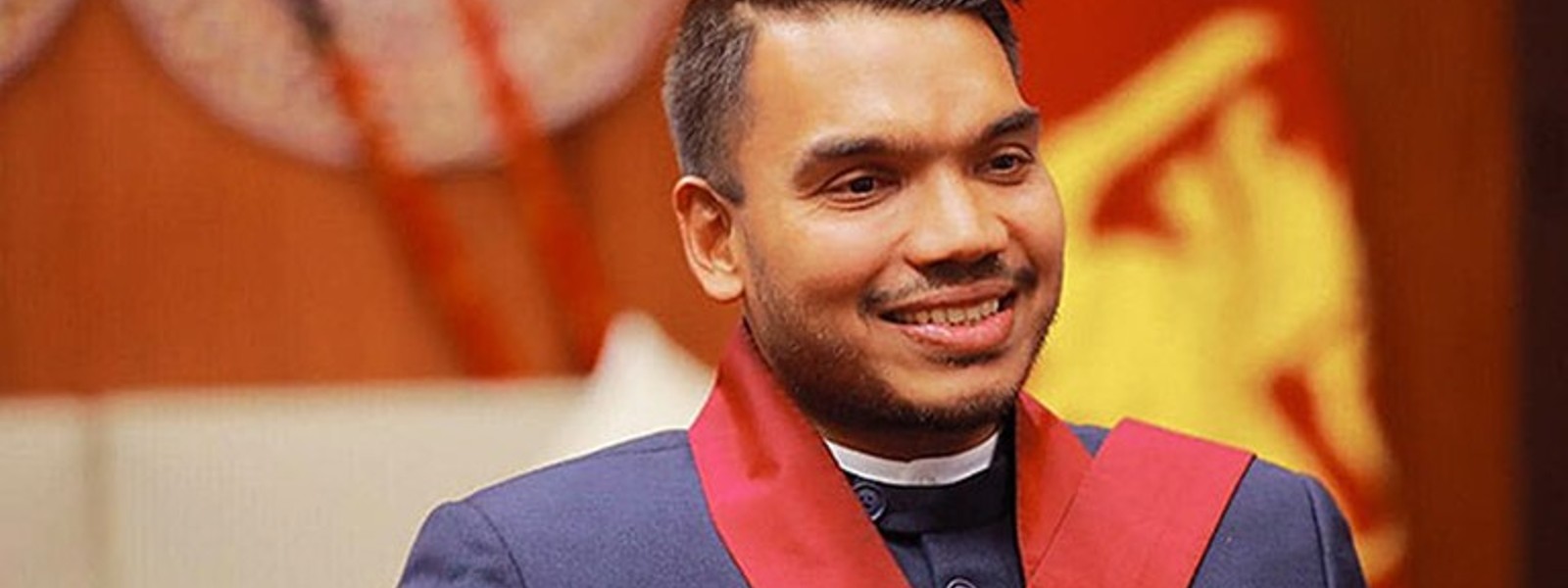
Namal, NPP MP Clash Over War Heroes Recognition



.png )
COLOMBO (News 1st); A heated exchange unfolded in Parliament today (19) as National People’s Power MP Dr. Sandaruwan Madarasinghe responded to remarks made by Sri Lanka Podujana Peramuna MP Namal Rajapaksa regarding the country’s war victory.
Addressing the House, Rajapaksa noted that 17 years have passed since the end of the 30-year conflict and emphasised that many individuals had made sacrifices to achieve that victory. He stated that due recognition must be given to war heroes and the leaders of that period, adding that the country’s fight had been against LTTE terrorism and not the Tamil people, with the aim of protecting national unity.
Rajapaksa also criticised the current leadership, stating that neither the President nor the Prime Minister had issued even a basic message acknowledging the contribution of war heroes.
He further claimed that while injured war veterans were being visited, certain groups linked to terrorist agendas were being allowed to commemorate events, and cited a recent incident involving former Minister Wimal Weerawansa as an example, describing the situation as “shameful.”
Responding to these remarks, Dr. Madarasinghe stated that some political parties and individuals believe that war heroes belong exclusively to them and that they act as their custodians.
He argued that war heroes had been drawn into political agendas beyond their duties, leading to consequences such as imprisonment for some who had rendered significant service during the conflict.
He questioned how allegations had arisen against senior intelligence and military officials in cases including the Easter attacks and alleged abductions and killings, attributing such outcomes to what he described as a power-driven political culture.
Dr. Madarasinghe further alleged that war heroes had been used for duties unrelated to their service, including guarding properties and sites in areas such as Hambantota over extended periods, both during and after the war.
He also cited instances involving the deployment of war heroes and appointments within the armed forces, arguing that such actions were not reflective of genuine respect.
He stated that honouring war heroes must go beyond rhetoric and should be demonstrated through tangible actions.
Other Articles







Featured News
-835300_550x300.jpg)


News 1st, MTV Channel (Pvt) Ltd, MBC Networks (Pvt) Ltd, 45/3, Braybrooke Street, Colombo-02.
T.P : +94 114 792 700,
Fax : +94 114 792 733
T.P : +94 114 792 700,
Fax : +94 114 792 733




 |  |  |
|---|---|---|
 |  |  |
 |  |  |
 |

.gif)