.webp)


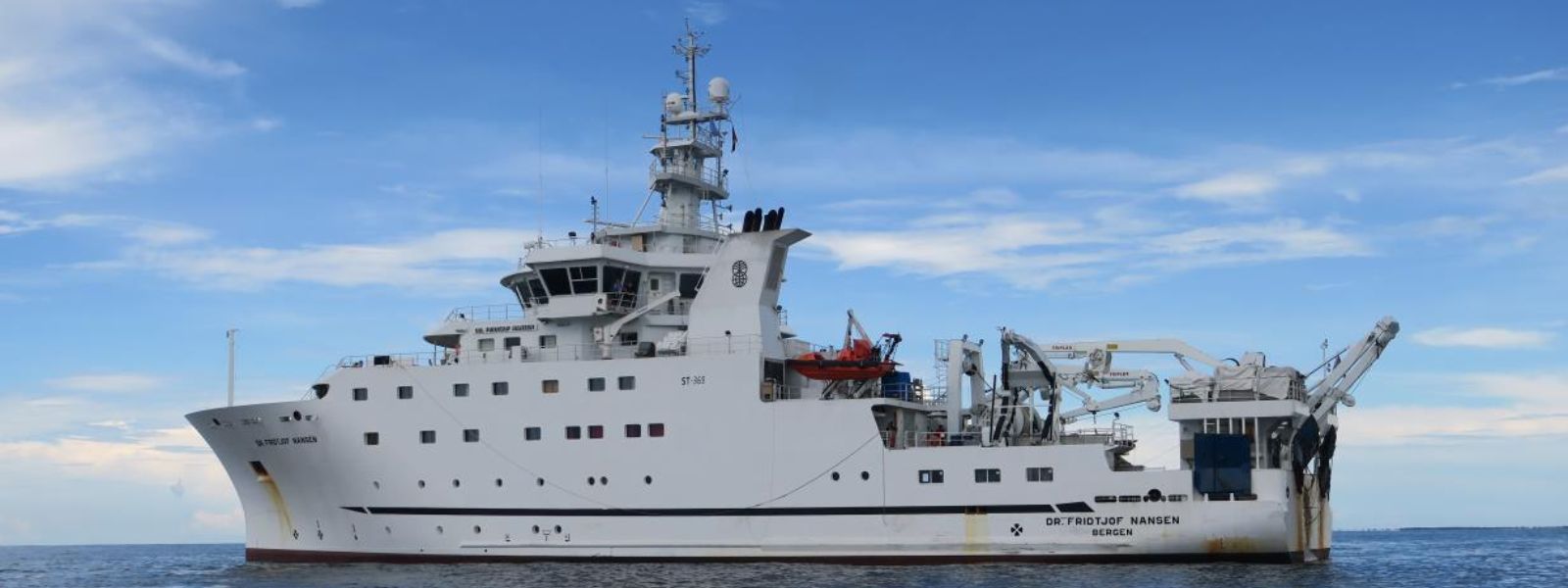
UN Research Vessel Completes Key Marine Survey in Sea of Sri Lanka



.png )
COLOMBO (News 1st); The Research Vessel Dr. Fridtjof Nansen completed a marine scientific survey in Sea of Sri Lanka and departed Colombo, marking the conclusion of a critical mission to strengthen the country’s ocean knowledge base.
As part of the EAF-Nansen Programme of the Food and Agriculture Organization of the United Nations (FAO) and Norway, the vessel spent several weeks collecting valuable scientific data on fish stocks, marine ecosystems, and oceanographic conditions, contributing to a deeper understanding of Sri Lanka’s marine resources.
Being the only research vessel that flies the UN flag, the Dr. Fridtjof Nansen serves as a unique platform for international cooperation. Bringing together researchers and fisheries management institutions in partner countries, it is equipped with advanced technology to generate critical knowledge on marine resources and ecosystems, supporting countries like Sri Lanka in making informed, science-based decisions. It also provided hands-on training opportunities for Sri Lankan researchers, strengthening national capacity in fisheries science and oceanographic research.
Norway is proud to partner with Sri Lanka and FAO through the EAF-Nansen Programme to support sustainable ocean planning, where management decisions are firmly based on science,” said May-Elin Stener, Ambassador of Norway to India, Sri Lanka, Bhutan and the Maldives.
The survey assessed both pelagic and demersal fish populations, while also collecting key oceanographic data such as water temperature, currents, nutrient levels, and dissolved oxygen. In addition, the potential of underutilized marine resources was explored, including cephalopods and mesopelagic species, and examined marine pollution, including microplastics, alongside nutritional and contaminant analysis of seafood.
This mission marks the fifth scientific survey conducted in Sri Lankan waters under the Nansen Programme, building on previous expeditions carried out between 1978 and 1980 and most recently in 2018. Updated data is particularly important in light of evolving marine ecosystems and changing fish stock dynamics.
The survey was implemented in close collaboration with Sri Lankan institutions, with scientists from the National Aquatic Resources Research and Development Agency (NARA) leading the scientific work, supported by experts and crew from Norway’s Institute of Marine Research (IMR) that operates the vessel and is responsible for the scientific activities and training aboard.
The survey also contributes to Sri Lanka’s international reporting obligations, including requirements related to marine mammal observations necessary to maintain access to global seafood markets.
The findings from this mission will be analyzed and shared with national stakeholders to guide future fisheries management strategies and policy development, ensuring the sustainable use of Sri Lanka’s ocean resources for generations to come.
Other Articles








Featured News

-835300_550x300.jpg)


News 1st, MTV Channel (Pvt) Ltd, MBC Networks (Pvt) Ltd, 45/3, Braybrooke Street, Colombo-02.
T.P : +94 114 792 700,
Fax : +94 114 792 733
T.P : +94 114 792 700,
Fax : +94 114 792 733




 |  |  |
|---|---|---|
 |  |  |
 |  |  |
 |

.gif)