.webp)


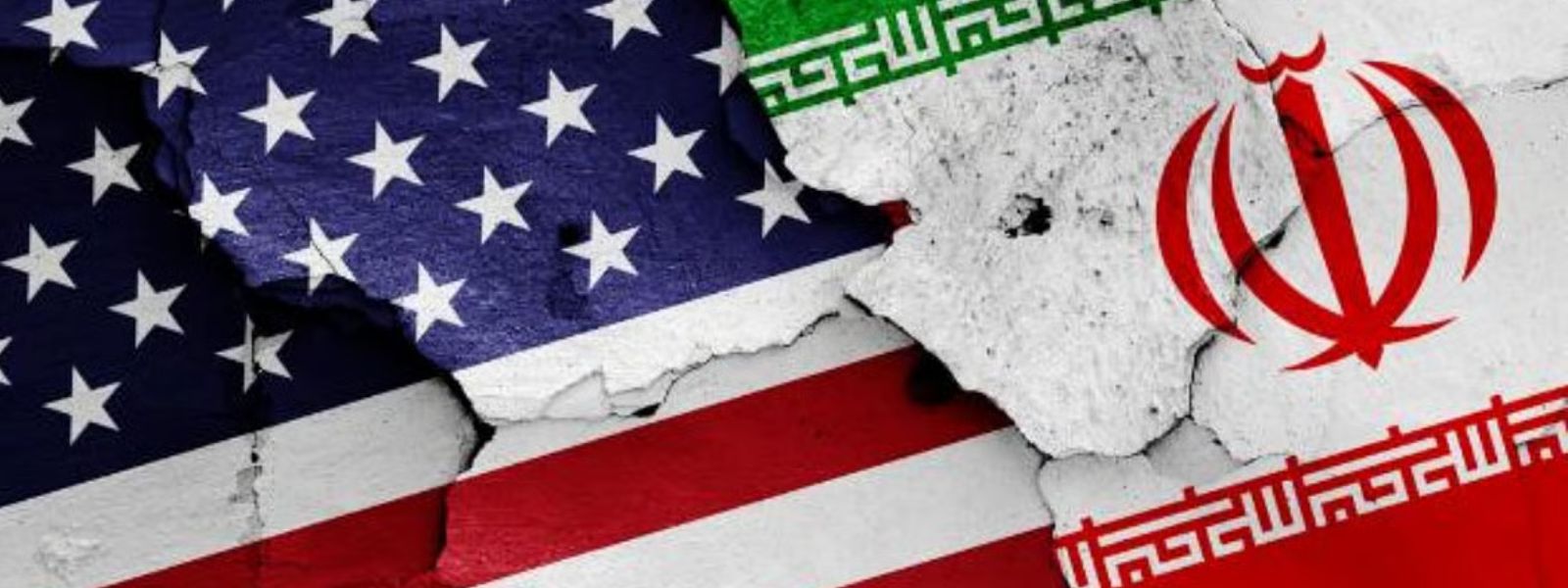
Special US Delegation Heads to Pakistan for Talks Aimed at Diplomatically Resolving Issues with Iran



.png )
Diplomatic efforts to resolve tensions between Iran and the United States have intensified, with Pakistan emerging as a key mediator in the evolving negotiations.
White House Press Secretary Karoline Leavitt confirmed that a special delegation has been dispatched to Pakistan for talks aimed at finding a diplomatic resolution to ongoing issues with Iran.
Meanwhile, a high-level Iranian delegation led by Foreign Minister Abbas Araghchi held a series of meetings in Islamabad yesterday with Pakistan’s Army Chief Field Marshal Asim Munir and Foreign Minister Ishaq Dar, before later meeting Prime Minister Shehbaz Sharif.
Field Marshal Munir has reportedly been playing an active role in facilitating dialogue between Tehran and Washington. Following the discussions, Araghchi stated that talks focused on recent developments related to a possible ceasefire framework between Iran and the United States, adding that Iran had shared its position on ending the conflict. He also noted Pakistan’s willingness to continue its mediation efforts.
Prime Minister Sharif expressed confidence that the negotiation process would move forward.
Second Round of Talks in Planning Stage
Reports indicate that US President Donald Trump’s special envoy Steve Witkoff and senior adviser Jared Kushner are expected to arrive in Islamabad for further discussions aimed at initiating a structured negotiation process with Iran.
Vice President JD Vance, who participated in earlier talks, is currently in the United States and is expected to travel only if significant progress is achieved.
President Trump, speaking to Reuters, stated that Iran is expected to present a revised proposal. However, the US position reportedly requires Iran to abandon its uranium enrichment programme and allow full access to maritime traffic through the Strait of Hormuz. These conditions are said to be part of a broader 15-point peace framework proposed by the White House.
Iran Maintains Sovereign Position
Iranian Foreign Minister Araghchi, following his meetings in Islamabad, reaffirmed Tehran’s principled stance, stating that Iran will not compromise on its sovereignty or nuclear rights. Iranian officials also clarified that no direct meeting with US representatives has been scheduled.
A senior Iranian official further indicated that discussions with Pakistan will remain limited to high-level engagements, while nuclear matters are not part of the Foreign Minister’s current mandate.
Araghchi is later expected to travel to Oman and Russia for further consultations on regional developments and coordination with international partners.
Regional and Strategic Developments
Iran has also reopened Imam Khomeini International Airport for limited international commercial flights after nearly two months of restricted airspace following conflict-related tensions. Flights have resumed to several Middle Eastern destinations including Medina, Muscat, and Istanbul.
At the same time, tensions remain high over the Strait of Hormuz, where reports indicate that dozens of commercial vessels are currently stranded due to regional instability. Turkey and Germany have both signalled readiness to support potential minesweeping or maritime security operations in the event of a peace agreement.
Iranian military officials, however, have warned of a response if what they describe as a “blockade or piracy at sea” by US forces continues in the region.
Wider Regional Instability Continues
Elsewhere, the Israel Defense Forces reported strikes on Hezbollah rocket launchers in southern Lebanon, while Hezbollah claimed it had also targeted Israeli positions. The latest exchanges come despite a recently extended ceasefire agreement, with both sides accusing each other of violations.
Meanwhile, Lebanon has reported renewed explosions and smoke near its southern border area following overnight strikes.
Source: BBC
Other Articles







Featured News
-835300_550x300.jpg)


News 1st, MTV Channel (Pvt) Ltd, MBC Networks (Pvt) Ltd, 45/3, Braybrooke Street, Colombo-02.
T.P : +94 114 792 700,
Fax : +94 114 792 733
T.P : +94 114 792 700,
Fax : +94 114 792 733




 |  |  |
|---|---|---|
 |  |  |
 |  |  |
 |

.gif)