.webp)


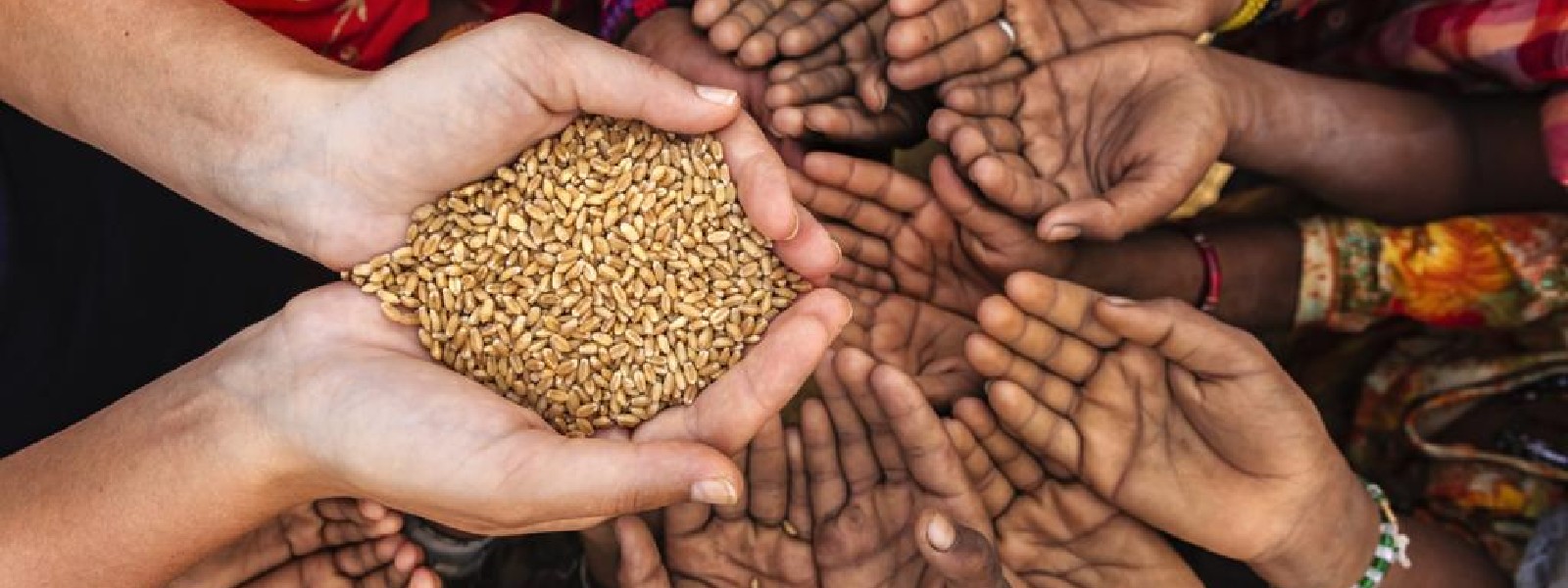
Over 60% of Sri Lankan families skipping meals



.png )
COLOMBO (News 1st) - 32 percent of Sri Lankan households are now food insecure, and 68 percent of households are turning to food based coping strategies such as eating less preferred food or reducing the number of meals and portion-sizes, revealed the latest World Food Program figures.
UNICEF estimates that approximately 2.3 million children are in need of humanitarian assistance, including 56,000 children suffering from severe acute malnutrition (SAM).
In late October, the Humanitarian Needs and Priorities plan (HNP) was extended until the end of 2022, with the aim of providing life-saving humanitarian assistance to 3.4 million of the most vulnerable people in Sri Lanka. United Nations agencies, funds and programmes and implementing partners have stepped up their interventions recently and the number of people reached, currently at around 1.2 million, is expected to further pick up speed in the next few weeks.
In November alone, WFP aims to distribute 7,398 MT of food to approximately 400,000 people in five districts. Additionally,approximately one million children will receive school meals for three months across 7,900 schools island wide.
Furthermore, FAO is stepping up its livelihood support interventions by providing much needed fertilizer to smallholder farmers. UNICEF, UNFPA and implementing partners are continuing to provide protection support to vulnerable women and children, and WHO is continuing to support the Ministry of Health primarily with the procurement of essential medicines and other medical supplies.
UN Office for the Coordination of Humanitarian Affairs said that 7 Million Sri Lankans are in need of humanitarian assistance.
The Humanitarian Needs and Priorities (HNP) plan has been extended until the end of 2022, recognizing the continuing humanitarian needs across multiple sectors.
To date, US$75.5 million have been contributed by donors towards the HNP, which includes generous contributions from Australia, the United States, Japan, Canada, Norway, New Zealand and the European Union.
According to the FAO/WFP Hunger Hotspots Report for October 2022 to January 2023, Sri Lanka is listed as a “hotspot of high concern”.
Other Articles
-854704_550x300.jpg)
-854698_550x300.jpg)
-854692_550x300.jpg)







Featured News




News 1st, MTV Channel (Pvt) Ltd, MBC Networks (Pvt) Ltd, 45/3, Braybrooke Street, Colombo-02.
T.P : +94 114 792 700,
Fax : +94 114 792 733
T.P : +94 114 792 700,
Fax : +94 114 792 733




 |  |  |
|---|---|---|
 |  |  |
 |  |  |
 |

.gif)